International

More than 95% of consumers live outside the United States. Selling more U.S.-made goods and services around the world is crucial to American jobs and will help businesses small and large grow. Expanding trade also enhances the competitiveness of U.S. manufacturers while boosting the buying power of American families. The International Affairs Division of the U.S. Chamber of Commerce leads the business community’s efforts to shape global policy.
Featured


Our Work Around the World
- International
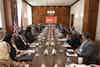
Why Major World Leaders Meet with the Chamber Every YearThe U.S. Chamber, unmatched in its advocacy efforts on the international stage, meets with top government officials from around the world to discuss investment, innovation, trade, and economic growth.
By Sean Hackbarth



U.S. Chamber members range from small businesses and chambers of commerce across the country to startups in fast-growing sectors, leading industry associations, and global corporations.
Discover the ROI Chamber membership can deliver for you.
Learn about the International Affairs Division
Around the globe, the U.S. Chamber advocates for free enterprise, competitive markets, and rules-based trade and investment as the path to economic opportunity and prosperity for all. We work every day to break down barriers to trade and investment, open new markets for American exports and investments, and make sure there's a level playing field for U.S. companies.






Join us and become a part of our movement to save the system that will secure our collective future.
Your voice is essential, and your participation is critical.
Related Litigation
Latest Content
- Our guest, Robert "Bob" Hormats, Visiting Lecturer at Yale and Former United States Under Secretary of State for Economic Growth, Energy, and the Environment, having advised Henry Kissinger on the original opening to China, has engaged with Beijing at the highest levels across five decades, and as such, is one of the world’s most seasoned voices on the U.S.-China relationship in the world. He discusses this turbulent situation with host Jay Sapsford and gives his take on what happens next.Ricaurte Vásquez Morales, Administrator of the Panama Canal Authority, the man responsible for a waterway offering many shippers an alternative to the Strait of Hormuz, joined Jay Sapsford to discuss global trade, energy, and strategic infrastructure.Argentina takes meaningful steps to enhance their IP system.The U.S.-Brazil Forum on Critical Minerals emphasized strengthening bilateral cooperation to establish secure, sustainable, and diversified critical mineral supply chains.This Hill letter was sent to the U.S. House of Representatives in support of H.R. 7084.This Hill letter was sent to the Members of the Senate Judiciary Committee.Scott Lincicome, Vice President of General Economics at the Cato Institute, one of the most cited voices in the national debate over U.S. trade policy, joins host Jay Sapsford to discuss recent moves to ease both Russian sanctions and the Jones Act.