- Cybersecurity Literacy
Cybersecurity Literacy
Durable Skills Remain Essential Alongside Technical Training


Majority Believe AP Cybersecurity Course Will Have Positive Impact
A majority of the cybersecurity decision-makers surveyed said that the AP Cybersecurity course (that will be taught in high schools starting in the 2026-2027 school year) will have a positive impact on preparing high schoolers to enter cybersecurity field and would give them a leg up on similar candidates who had not taken the course.
However, it’s important not to skimp on learning those ever-valuable durable skills, even at this early stage, because decision-makers will be looking for evidence that candidates have them.

Decision-Maker Viewpoints
In-depth interview participants find value in the AP Cybersecurity course simply because of the exposure it gives to different topics.
- “Exposure to the scenarios and the techniques in a learning environment... is super helpful because you can translate that into the context of whatever role you’re in.”
— Female, Interview Participant, Chief Information Security Officer
- “Lab work or something of this sort where they could touch the tools, that would be great, because then you would know that they come in with that baseline and that they have some hands-on experience.”
— Female, Interview Participant, Senior Manager Cybersecurity Recruitment
- “Covering general risk and mitigations and how to deploy countermeasures prior to those vulnerabilities being identified would be valuable. If it’s just a, hey, there’s a website vulnerability, okay, patch it, then that’s completely different.”
— Male, Interview Participant, Head of Security Operations
Overall, two in three (65%) report seeing, hearing, or reading anything about the AP Cybersecurity course. However, just 18% say they have heard a great deal.
The AP Cybersecurity credential validates the recognized professional skills outlined in the National Initiative for Cybersecurity Education (NICE) Workforce Framework. After learning about the course and its goals, 90% believe that it will have a positive impact on prepping high school students for a career in cybersecurity. Additionally, for entry-level roles outside of cybersecurity, 81% said they would be more likely to hire a candidate who had taken the AP Cybersecurity course over a similar candidate who had not.
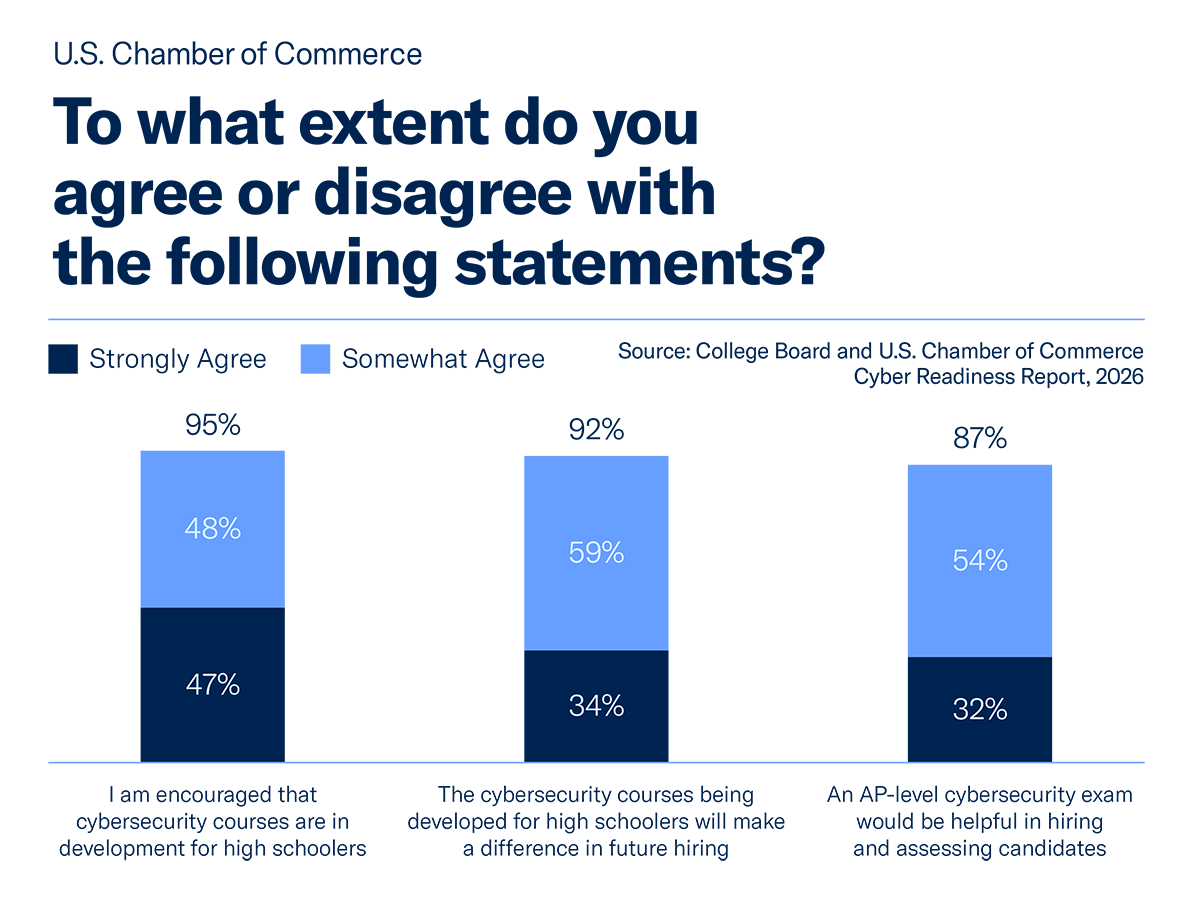
Among surveyed decision-makers, overwhelming majorities agree that they are encouraged by the development of cybersecurity courses for high schoolers (95%) and that these cybersecurity courses will make a difference in future hiring (92%). Additionally, 93% believe that there should be more cybersecurity courses taught in high school. Nearly nine in ten also agree that an AP-level cybersecurity exam would be helpful in hiring and assessing candidates.
At the same time, decision-makers are clear that real-world experiences matter, too. About nine in ten agree that work experience is more valuable than formal education (89%). This helps underscore that these durable skills are as important and desirable as the more technical skills.
When survey respondents were asked how much of a role high school courses play in their company’s hiring process, four in five say that they play at least some role, including nearly three in ten who say they play a major role (28%). Gen Z/Millennial decision-makers are more likely than their Gen X counterparts to say that high school courses play a role in the hiring process (84% vs. 75%).
America's leading employers are struggling to find candidates with the right combination of technical experience and workplace skills for today's cybersecurity jobs.
Download Report