
Updated
September 09, 2026
Published
June 20, 2025
As a trusted advocate, the U.S. Chamber regularly meets with members of Congress, congressional staff, policy makers, and administration officials to share expertise, provide policy analysis, and promote collaboration between government and industry leaders.
Building strong relationships among these stakeholders empowers the Chamber and business community to play a vital role in shaping policies that benefit American workers and businesses.
This includes providing key issues to members of Congress on a variety of top topics.
During the 119th Congress, 14 issue experts from the U.S. Chamber have testified before Congressional Committees 15 times on topics ranging from small businesses to AI to veteran hiring.
Expanding Data Centers While Protecting Communities
U.S. Chamber Executive Vice President Neil Bradley testified before the House Energy and Commerce Subcommittee on Environment on how the U.S. can and must expand data center development to support the digital economy while simultaneously protecting drinking water systems, ratepayers, and communities through smart policy, water reuse, modern permitting, and infrastructure investment.
“[D]ata center growth and community protection are not competing goals. With the right policies, planning, and partnerships, the United States can build the digital infrastructure it needs while protecting local water systems, supporting affordability, and strengthening resilience,” he said.
Securing America's Competitive Leadership
Marty Durbin, Senior Vice President for Policy testified before the House Energy and Commerce Subcommittee on Commerce, Manufacturing, and Trade on America's competitiveness at 250th and legislative proposals to secure U.S. technology leadership.
Durbin emphasized the need for national regulatory frameworks on both AI and data privacy, underscored the need for a streamlined, modernized permitting process, and communicated the urgency surrounding emerging sectors like quantum computing and what steps the U.S. must take to maintain our competitive edge on the world stage. He also warned that the EU's Corporate Sustainability Due Diligence Directive (CS3D), which would impose European regulations on U.S. companies operating outside Europe's borders, "creates global legal uncertainty, conflicts with U.S. law and governance principles, and burdens businesses operating across global supply chains." To secure U.S. technology leadership, Durbin urged Congress to advance a pro-innovation agenda that includes a risk-based Federal AI framework, a single national privacy standard, stronger public-private partnerships, workforce development, modernized permitting, and reliable energy infrastructure.

U.S. Chamber EVP Neil Bradley testifies before the House Energy and Commerce Subcommittee on Environment on how data centers can be built in the U.S. without straining or raising costs for local water systems and the people who depend on them.

Marty Durbin, Senior Vice President for Policy, before the House Energy and Commerce Subcommittee on Subcommittee on Commerce, Manufacturing, and Trade on America's competitiveness at 250th and legislative proposals to secure U.S. technology leadership.

Jordan Crenshaw, Senior Vice President, Technology Engagement Center,, before the House Financial Services Committee on updating America’s financial privacy framework for the 21st century. (Photo courtesy of the House Financial Services Committee.)

Dan Byers, Global Energy Institute Vice President for Policy, before the Senate Foreign Relations Subcommittee on Europe and Regional Security Cooperation on how the U.S. and EU can secure Europe’s energy future while boosting prosperity and reducing global emissions.

Mike Flood, Senior Vice President of the Center for Capital Markets Competitiveness, at a House Financial Services Committee's Subcommittee on Financial Institutions hearing.
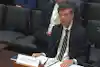
Tom Wickham, Vice President and Managing Director of Government Affairs, at a House Small Business Committee Hearing on the cost of crime on small businesses.
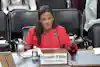
Elizabeth O'Brien, Senior Vice President, Hiring Our Heroes, U.S. Chamber of Commerce Foundation at a Senate Veterans Affairs Committee hearing on maximizing veterans' success after service.
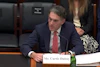
Curtis Dubay, the Chamber's chief economist, at a House Financial Services Committee Monetary Policy Taskforce hearing on how adding additional goals outside the Federal Reserve’s current mandate hinders its ability to focus on price stability, and the costs associated with failing to achieve its objectives.

Liz O’Brien, Director of Hiring Our Heroes' Military Spouse Program, before House Veterans Affairs Subcommittee on Economic Opportunity on strengthening the Transition Assistance Program (TAP) to ensure a smoother transition to civilian life for tomorrow's veterans.

Chad Whiteman, Vice President for Environment and Regulatory Affairs, at a hearing before the House Energy and Commerce Subcommittee on Environment on how the Clean Air Act impacts building necessary infrastructure and onshoring American innovation.
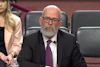
Keith Webster, President of the Defense and Aerospace Council, before the Senate Armed Services Committee on the Department of Defense responsibilities related to Foreign Military Sales (FMS) and international armaments cooperation.

Stephen Waguespack, President of the Institute for Legal Reform and Senior Vice President of the U.S. Chamber Federation for State and Local Advocacy, before House Energy and Commerce Subcommittee on Oversight and Investigations on impacts of illegal robocalls and robotexts as well as the current progress and next steps to deter these scam communications.
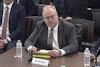
Sean Heather, Senior Vice President for International Regulatory Affairs and Antitrust, before the House Energy and Commerce Subcommittee on Commerce, Manufacturing, and Trade on AI regulation and the future of U.S. leadership.
Updating America’s Financial Privacy Framework
"For nearly a quarter century, the Gramm‑Leach‑Bliley Act, or GLBA, has provided a reliable foundation for financial privacy. As we look toward the future of data privacy, rather than creating a new framework, modernization efforts should focus on updating the existing law through targeted policies that strengthen clarity, streamline compliance, and preserve the law’s proven protections. The U.S. Chamber of Commerce urges Congress to both modernize the Gramm‑Leach‑Bliley Act (GLBA) in a manner that provides regulatory certainty as well as adopt broader comprehensive privacy legislation." - Jordan Crenshaw, Senior Vice President of the Chamber's Technology Engagement Center, before the House Financial Services Committee on updating America’s financial privacy framework for the 21st century.
Unlocking A Pathway to European Energy Security
"With strong leadership and cooperation between U.S. and EU government and industry, targeted policy measures can unlock Europe’s pathway to long-term energy security, support U.S. jobs and economic growth, and reduce emissions." - Dan Byers, Global Energy Institute Vice President for Policy, before the Senate Foreign Relations Subcommittee on Europe and Regional Security Cooperation on how the U.S. and EU can secure Europe’s energy future while boosting prosperity and reducing global emissions.
Right-Sizing the U.S. Bank Capital Framework
"At a time of significant affordability concerns, it is critically important to calibrate the entire bank capital structure to fit the size and complexity of the U.S. banking system – including local, community, regional, super-regional, national, and global banks." - Mike Flood, Senior Vice President of the Center for Capital Markets Competitiveness, at a House Financial Services Committee's Subcommittee on Financial Institutions on how capital requirements can be tailored to promote economic growth, competitiveness, and financial stability.
Combating Retail Crime and Cargo Theft
"Across the country, surges in retail crime and cargo theft are putting the nation’s businesses and consumers at risk. While higher-profile crimes and finger-pointing grab the headlines, businesses continue to struggle with rising business-focused crimes, and employees, businesses, and consumers are playing the price. Crimes against businesses impact local communities, workers, and the businesses they rely on. Tackling this issue requires support from policymakers, law enforcement, prosecutors, and businesses." - Tom Wickham, Vice President and Managing Director of Government Affairs, at a House Small Business Committee hearing on the cost of crime on small businesses.
Maximizing Veterans’ Success After Service
"Over the last fourteen years, Hiring Our Heroes has been proud to serve over 1 million veterans, transitioning service members, and military spouses in communities across the United States and abroad—always in partnership with the private and public sectors. And with more than 200,000 service members transitioning annually, there is always more work to be done. Hiring Our Heroes remains wholly committed to connecting veterans and military spouses with meaningful career opportunities and honored to serve on the front line of this movement. We will continue to unite our partners in a common mission to achieve fundamental change in the veteran and military spouse employment landscape." - Elizabeth O'Brien, Senior Vice President, Hiring Our Heroes, U.S. Chamber of Commerce Foundation at a Senate Veterans Affairs Committee hearing on maximizing veterans' success after service.
Responsibilities of the Fed
“A Fed Reserve that has as a sole mandate of stable prices and that is independent from political pressure provides the best environment for the Fed to achieve its goals. The Fed’s macroeconomic tools are blunt and how they influence prices is often uncertain.... Additional mandates divert its attention from what should be its core function of keeping prices stable, risking that it will not do this extremely important job as well as it could. Aside from a mandate of stable prices, the only other function the Fed should serve would be to supervise the banks that are members and to act as the lender-of-last-resort. Both of these jobs are part of setting monetary policy.” – Curtis Dubay, the Chamber's chief economist at a House Financial Services Committee Monetary Policy Taskforce hearing on how adding additional goals outside the Federal Reserve’s current mandate hinders its ability to focus on price stability, and the costs associated with failing to achieve its objectives.
Creating Better Transitions to Civilian Life for Veterans
“Today’s transitioning service members need more than TAP as they search for postmilitary careers. They need programs that provide them with the tools and resources to help translate their skills, search for and find industries and opportunities, and connect with employers.” – Liz O’Brien, Director of Hiring Our Heroes' Military Spouse Program, before House Veterans Affairs Subcommittee on Economic Opportunity on strengthening the Transition Assistance Program (TAP) to ensure a smoother transition to civilian life for tomorrow's veterans.
International Armaments Cooperation
“True FMS transformation is a task for the interagency, in partnership with the Congress, administration, and private sector. Without a unified approach, true FMS transformation will remain elusive.” – Keith Webster, President of the Defense and Aerospace Council, before the Senate Armed Services Committee on the Department of Defense responsibilities related to Foreign Military Sales (FMS) and international armaments cooperation.
U.S. Leadership in AI Regulation
“Preventing the spread of Europe's regulatory approach is crucial. It will fragment global AI governance, deter investment, and burden businesses striving to innovate and compete.” – Sean Heather, Senior Vice President for International Regulatory Affairs and Antitrust, before the House Energy and Commerce Subcommittee on Commerce, Manufacturing, and Trade on AI regulation and the future of U.S. leadership.
Deterring Illegal Robocalls
“The Chamber’s research has repeatedly shown how the TCPA has created a cottage industry of unnecessary and often abusive litigation, including class-actions, burdening how businesses reach their customers, while doing little to stop truly abusive robocalls or robotexts and protect consumers.” – Stephen Waguespack, President of the Institute for Legal Reform and Senior Vice President of the U.S. Chamber Federation for State and Local Advocacy, before House Energy and Commerce Subcommittee on Oversight and Investigations on impacts of illegal robocalls and robotexts as well as the current progress and next steps to deter these scam communications.
Improving the Permitting Process
“Unless the 2024 [particulate matter] rule is rescinded, it will block the permitting of new manufacturing facilities and associated good-paying jobs, pushing investment overseas just at a time when we are trying to bring back manufacturing and stronger supply chains.” – Chad Whiteman, Vice President for Environment and Regulatory Affairs, at a hearing before the House Energy and Commerce Subcommittee on Environment on how the Clean Air Act impacts building necessary infrastructure and onshoring American innovation.
About the author

Rachel Ledbetter
Rachel Ledbetter is a director of policy and political communications at the U.S. Chamber of Commerce.


