 Neil Bradley
Executive Vice President, Chief Policy Officer, and Head of Strategic Advocacy, U.S. Chamber of Commerce
Published
February 20, 2026
Americans across the country are feeling the strain of higher prices—for groceries, housing, insurance, health care, and energy. Policymakers understandably want to act quickly to ease that pressure. But history shows that some well-intentioned responses can actually make affordability worse.
The most effective way to bring down prices sustainably is by increasing supply and reducing unnecessary costs imposed by government policy—not heavy-handed government interventions. When supply increases and fixed costs are reduced, competitive markets do what they’re meant to do—drive prices down.
The Key to Affordability: Increase Supply and Reduce Fixed Costs
Sustainable affordability comes from two core strategies:
- Increasing supply. When supply is constrained, prices rise. When supply expands, prices fall. Even the credible signal of future supply growth can help reduce prices today by improving market expectations.
- Reducing external fixed costs. Costs imposed by government policy—things like tariffs, permitting delays, litigation, and regulatory complexity—raise prices without improving products or services. Policy reform can help lower these costs.
Applying these principles across key sectors can deliver meaningful relief for consumers.
Government Intervention is Not the Answer
Some suggested policy responses focus on treating the symptom rather than the cause:
- Government subsidies increase demand without addressing supply constraints, which can push prices even higher.
- Price controls and cost shifting fail to reduce costs—price controls discourage investment and constrain supply, while cost shifting simply moves costs from one payer to another, often leading to shortages or lower quality.
These approaches may offer short-term political appeal, but they can quickly lead to shortages and even higher prices.
Practical Pathways to Make Life More Affordable:
Below we offer some suggestions as to how policymakers can improve affordability in key areas of the household budget.
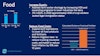
Food
Food prices remain elevated in part because supply is constrained and costs are artificially inflated.
- Increase supply: Address the farm worker shortage, including by expanding the H-2A visa program and extending it to sectors like dairy. According to the USDA, roughly 40% of crop workers in 2022 lacked legal immigration status, underscoring the scale of the labor challenge. Last year, a shortage of farm workers led to some crops going unplanted and others going unharvested. This reduces supply.
- Reduce fixed costs: Expand tariff exemptions to cover all food products and fertilizers. In 2024, the federal government imposed tariffs of a little under $3 billion on food and fertilizer. In the first 11 months of 2025, tariffs on the same products totaled nearly $11 billion—an $8 billion food tax.
- In November, the Trump administration moved to lift previously imposed tariffs on food items not generally grown in the United States. Expanding tariff relief to all food products and agricultural inputs like fertilizer would remove upward pressure on prices.
- Food generally makes its way from the farm to our local grocery store via truck. Shipping costs make up a sizeable portion of the final price paid in the grocery store. Everything that increases shipping costs from fuel to truck insurance ends up pushing prices at the grocery higher. A recent study commissioned by the Chamber found that reforming litigation around commercial truck accidents would lower insurance costs by enough to reduce food inflation by up to 15% over ten years.
Auto Insurance
Rising repair costs and legal expenses have led to higher premiums for drivers.
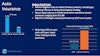
- Reduce fixed costs: The cost of frivolous lawsuits involving auto accidents and repairs ultimately shows up in the premiums we all pay for auto insurance. States that have worked to reform their legal and insurance system to discourage frivolous litigation have seen a direct reduction in insurance premiums. This includes recent premium reductions in Florida ranging from 4% to 15%, and Michigan, where it is estimated drivers saved $357 over five years.
- Tariffs imposed on auto parts increase the costs of repairing vehicles after an accident, which in turn results in higher auto insurance premiums. In 2024, the federal government collected $3.2 billion in tariffs on auto parts. In the first 11 months of 2025, that tax had increased to $11.1 billion. Reducing tariffs on auto parts would further lower repair costs and ease pressure on insurance premiums.
Electricity
Demand for electricity is growing rapidly, particularly from data centers and advanced manufacturing, putting upward pressure on prices.
- Increase supply: Electric utilities and AI companies have committed to investing billions of dollars to expanding electricity generation. One barrier to quickly bringing this new power online is the length of time it takes to get new generation and distribution permitted. Reforming the permitting process can help speed the construction of new generation and reduce pressure on prices.
- Similarly, maintaining an all-of-the-above energy strategy by keeping existing generation online and completing projects already under development, such as offshore wind, will help meet demand.
Housing
Housing affordability is fundamentally a supply problem. Too few houses were built over the past two decades resulting in millions of lost housing units, putting upward pressure on prices.
- Increase supply: Congress should complete the work it has begun on housing legislation that makes it easier for state and local governments to improve zoning and permitting laws which currently serve as a barrier to building new homes. A recent study found that large metro areas that added at least 10% to their housing stock between 2017 and 2023 saw significant reductions in rental prices.
- Building new housing will also require more construction workers. Legal immigration reform can ensure that we have the workers needed.
- Reduce fixed costs: Beyond labor, a major cost of a new home is construction material. Many of these materials, including softwood lumber and drywall, are imported. The tariffs on lumber, drywall, roofing, and cabinets more than doubled between 2024 and 2025. Removing the new tariffs on these products would remove the upward pressure on prices.
Healthcare
Healthcare costs are increasing for a variety of reasons, including workforce shortages, regulatory friction, and litigation risk.
- Increase supply: America has a persistent shortage of nurses and physicians. Today, we partially meet our healthcare workforce needs by allowing qualified foreign-trained professionals to practice in the U.S. Expanding these pathways, including through H-1B visas and a dedicated nurse visa program, will help address the workforce shortage, especially in rural areas. In addition, expanding telehealth services and medical licensure and practice reform can help put downward pressure on prices.
- Reduce fixed costs: The cost of frivolous litigation is ultimately borne in the prices we pay for health services and insurance. Medical liability reform and reforms to the False Claims Act could both help lower prices for consumers.
- AI has the potential to speed-up clinical trials and improve medical record keeping and physician visits, but only if there is regulatory certainty around the use of AI, including a preemption of conflicting state laws. Congressional action could provide such certainty, helping reduce costs on everything from doctor visits to new drug approvals.
The Bottom Line
Addressing affordability starts with proven economic principles. When policymakers focus on increasing supply and reducing unnecessary costs, prices come down and consumers benefit.
That goal requires moving beyond short-term fixes and embracing structural reforms that expand supply and reduce fixed costs—the kind of disciplined policy choices that strengthen the economy and improve everyday life for American families.
About the author
Neil Bradley
Neil Bradley is executive vice president, chief policy officer, and head of strategic advocacy at the U.S. Chamber of Commerce. He has spent two decades working directly with congressional committee chairpersons and other high-ranking policymakers to achieve solutions.