Disasters are a regular and costly part of life in the United States. From hurricanes and wildfires to floods, tornadoes and droughts, the frequency and severity of natural disasters have surged over the past decade.
In 2024 alone, the U.S. experienced 27 separate billion-dollar disasters, totaling over $182 billion in damages. That’s the fifth consecutive year with 18 or more such events, highlighting a troubling new normal. As weather events accelerate and development continues in high-risk areas, the cost of recovery is climbing, and communities are struggling to keep pace.

Disasters Are Increasing in Cost and Severity
The data tell a stark story: the number of billion-dollar disasters has more than doubled in recent decades. Between 1980—2024, the U.S. averaged nine major disasters per year; in the last five years, that average jumped to 23.
Hurricanes (see “Tropical Cyclones” in the graph below) are especially destructive. Hurricane Katrina (2005) remains the costliest U.S. storm at $201.3 billion, followed by Harvey (2017) at $160 billion and Ian (2022) at $119.6 billion. These storms caused catastrophic flooding, widespread infrastructure damage, and long-term economic disruption.
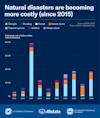

Why are hurricanes so costly? A combination of factors: high winds, storm surge, and intense rainfall that overwhelms infrastructure. Flooding alone accounts for roughly 60% of hurricane-related damages. As more people move to coastal areas and construction costs rise, the financial toll of each storm grows.
-
$119.6B
Cost of Hurricane Ian – Sep 2022
-
$84.6B
Cost of Hurricane Isa – Aug 2024
Know Your Risk: Where You Live Matters
Understanding your community’s disaster risk is the first step toward resilience. Disasters don’t strike evenly, and their costs vary dramatically by region. The interactive map below uses NOAA’s Billion-Dollar Disasters data to show where the most damaging events have occurred across the country.
Economic Impact of Natural Disasters
Check out the geographic footprint of billion-dollar disasters since 1980
Alabama
-
$314
Per capita cost of federally funded post-disaster assistance programs.
Costs per disaster type (1980-2024)
- Drought: $6,938,000,000
- Flooding: $138,000,000
- Freeze: $152,000,000
- Severe Storm: $14,670,000,000
- Tropical Cyclone: $27,198,000,000
- Wildfire: $733,000,000
- Winter Storm: $2,432,000,000
Alaska
-
$770
Per capita cost of federally funded post-disaster assistance programs.
Costs per disaster type (1980-2024)
- Drought: $0
- Flooding: $0
- Freeze: $0
- Severe Storm: $0
- Tropical Cyclone: $0
- Wildfire: $2,344,000,000
- Winter Storm: $0
Arizona
-
$3
Per capita cost of federally funded post-disaster assistance programs.
Costs per disaster type (1980-2024)
- Drought: $1,607,000,000
- Flooding: $1,922,000,000
- Freeze: $0
- Severe Storm: $5,472,000,000
- Tropical Cyclone: $0
- Wildfire: $1,356,000,000
- Winter Storm: $0
Arkansas
-
$135
Per capita cost of federally funded post-disaster assistance programs.
Costs per disaster type (1980-2024)
- Drought: $6,894,000,000
- Flooding: $4,704,000,000
- Freeze: $299,000,000
- Severe Storm: $11,952,000,000
- Tropical Cyclone: $720,000,000
- Wildfire: $0
- Winter Storm: $1,360,000,000
California
-
$224
Per capita cost of federally funded post-disaster assistance programs.
Costs per disaster type (1980-2024)
- Drought: $16,558,000,000
- Flooding: $19,215,000,000
- Freeze: $15,491,000,000
- Severe Storm: $3,534,000,000
- Tropical Cyclone: $0
- Wildfire: $100,094,000,000
- Winter Storm: $0
Colorado
-
$157
Per capita cost of federally funded post-disaster assistance programs.
Costs per disaster type (1980-2024)
- Drought: $7,343,000,000
- Flooding: $2,082,000,000
- Freeze: $105,000,000
- Severe Storm: $33,318,000,000
- Tropical Cyclone: $0
- Wildfire: $7,232,000,000
- Winter Storm: $419,000,000
Connecticut
-
$158
Per capita cost of federally funded post-disaster assistance programs.
Costs per disaster type (1980-2024)
- Drought: $13,000,000
- Flooding: $612,000,000
- Freeze: $42,000,000
- Severe Storm: $909,000,000
- Tropical Cyclone: $6,007,000,000
- Wildfire: $0
- Winter Storm: $3,146,000,000
Delaware
-
$20
Per capita cost of federally funded post-disaster assistance programs.
Costs per disaster type (1980-2024)
- Drought: $887,000,000
- Flooding: $35,000,000
- Freeze: $13,000,000
- Severe Storm: $286,000,000
- Tropical Cyclone: $1,035,000,000
- Wildfire: $0
- Winter Storm: $935,000,000
District of Columbia
-
$0
Per capita cost of federally funded post-disaster assistance programs.
Costs per disaster type (1980-2024)
- Drought: $0
- Flooding: $0
- Freeze: $0
- Severe Storm: $0
- Tropical Cyclone: $0
- Wildfire: $0
- Winter Storm: $0
Florida
-
$571
Per capita cost of federally funded post-disaster assistance programs.
Costs per disaster type (1980-2024)
- Drought: $1,532,000,000
- Flooding: $2,944,000,000
- Freeze: $13,921,000,000
- Severe Storm: $6,645,000,000
- Tropical Cyclone: $422,702,000,000
- Wildfire: $306,000,000
- Winter Storm: $4,028,000,000
Georgia
-
$145
Per capita cost of federally funded post-disaster assistance programs.
Costs per disaster type (1980-2024)
- Drought: $8,402,000,000
- Flooding: $1,419,000,000
- Freeze: $1,315,000,000
- Severe Storm: $13,121,000,000
- Tropical Cyclone: $33,041,000,000
- Wildfire: $295,000,000
- Winter Storm: $2,916,000,000
Hawaii
-
$1,772
Per capita cost of federally funded post-disaster assistance programs.
Costs per disaster type (1980-2024)
- Drought: $0
- Flooding: $0
- Freeze: $0
- Severe Storm: $0
- Tropical Cyclone: $6,913,000,000
- Wildfire: $5,665,000,000
- Winter Storm: $0
Idaho
-
$38
Per capita cost of federally funded post-disaster assistance programs.
Costs per disaster type (1980-2024)
- Drought: $3,593,000,000
- Flooding: $586,000,000
- Freeze: $13,000,000
- Severe Storm: $0
- Tropical Cyclone: $0
- Wildfire: $3,557,000,000
- Winter Storm: $0
Illinois
-
$67
Per capita cost of federally funded post-disaster assistance programs.
Costs per disaster type (1980-2024)
- Drought: $17,502,000,000
- Flooding: $10,169,000,000
- Freeze: $432,000,000
- Severe Storm: $28,794,000,000
- Tropical Cyclone: $1,082,000,000
- Wildfire: $0
- Winter Storm: $2,580,000,000
Indiana
-
$10
Per capita cost of federally funded post-disaster assistance programs.
Costs per disaster type (1980-2024)
- Drought: $8,795,000,000
- Flooding: $5,541,000,000
- Freeze: $235,000,000
- Severe Storm: $15,747,000,000
- Tropical Cyclone: $1,267,000,000
- Wildfire: $0
- Winter Storm: $799,000,000
Iowa
-
$329
Per capita cost of federally funded post-disaster assistance programs.
Costs per disaster type (1980-2024)
- Drought: $16,507,000,000
- Flooding: $24,792,000,000
- Freeze: $78,000,000
- Severe Storm: $23,085,000,000
- Tropical Cyclone: $0
- Wildfire: $0
- Winter Storm: $236,000,000
Kansas
-
$77
Per capita cost of federally funded post-disaster assistance programs.
Costs per disaster type (1980-2024)
- Drought: $27,047,000,000
- Flooding: $3,660,000,000
- Freeze: $176,000,000
- Severe Storm: $13,993,000,000
- Tropical Cyclone: $0
- Wildfire: $0
- Winter Storm: $206,000,000
Kentucky
-
$341
Per capita cost of federally funded post-disaster assistance programs.
Costs per disaster type (1980-2024)
- Drought: $7,903,000,000
- Flooding: $968,000,000
- Freeze: $256,000,000
- Severe Storm: $16,603,000,000
- Tropical Cyclone: $1,585,000,000
- Wildfire: $0
- Winter Storm: $1,588,000,000
Louisiana
-
$2,953
Per capita cost of federally funded post-disaster assistance programs.
Costs per disaster type (1980-2024)
- Drought: $7,074,000,000
- Flooding: $21,529,000,000
- Freeze: $210,000,000
- Severe Storm: $12,929,000,000
- Tropical Cyclone: $270,543,000,000
- Wildfire: $0
- Winter Storm: $2,318,000,000
Maine
-
$62
Per capita cost of federally funded post-disaster assistance programs.
Costs per disaster type (1980-2024)
- Drought: $13,000,000
- Flooding: $601,000,000
- Freeze: $0
- Severe Storm: $244,000,000
- Tropical Cyclone: $144,000,000
- Wildfire: $0
- Winter Storm: $1,627,000,000
Maryland
-
$41
Per capita cost of federally funded post-disaster assistance programs.
Costs per disaster type (1980-2024)
- Drought: $3,447,000,000
- Flooding: $346,000,000
- Freeze: $34,000,000
- Severe Storm: $3,773,000,000
- Tropical Cyclone: $6,529,000,000
- Wildfire: $0
- Winter Storm: $3,147,000,000
Massachusetts
-
$77
Per capita cost of federally funded post-disaster assistance programs.
Costs per disaster type (1980-2024)
- Drought: $20,000,000
- Flooding: $1,318,000,000
- Freeze: $50,000,000
- Severe Storm: $880,000,000
- Tropical Cyclone: $3,689,000,000
- Wildfire: $0
- Winter Storm: $5,179,000,000
Michigan
-
$33
Per capita cost of federally funded post-disaster assistance programs.
Costs per disaster type (1980-2024)
- Drought: $3,302,000,000
- Flooding: $3,410,000,000
- Freeze: $50,000,000
- Severe Storm: $7,113,000,000
- Tropical Cyclone: $115,000,000
- Wildfire: $0
- Winter Storm: $678,000,000
Minnesota
-
$61
Per capita cost of federally funded post-disaster assistance programs.
Costs per disaster type (1980-2024)
- Drought: $10,261,000,000
- Flooding: $6,602,000,000
- Freeze: $55,000,000
- Severe Storm: $24,933,000,000
- Tropical Cyclone: $0
- Wildfire: $100,000,000
- Winter Storm: $227,000,000
Mississippi
-
$272
Per capita cost of federally funded post-disaster assistance programs.
Costs per disaster type (1980-2024)
- Drought: $9,029,000,000
- Flooding: $3,754,000,000
- Freeze: $130,000,000
- Severe Storm: $7,010,000,000
- Tropical Cyclone: $62,030,000,000
- Wildfire: $43,000,000
- Winter Storm: $4,819,000,000
Missouri
-
$187
Per capita cost of federally funded post-disaster assistance programs.
Costs per disaster type (1980-2024)
- Drought: $12,652,000,000
- Flooding: $16,272,000,000
- Freeze: $656,000,000
- Severe Storm: $29,335,000,000
- Tropical Cyclone: $561,000,000
- Wildfire: $0
- Winter Storm: $929,000,000
Montana
-
$116
Per capita cost of federally funded post-disaster assistance programs.
Costs per disaster type (1980-2024)
- Drought: $13,884,000,000
- Flooding: $357,000,000
- Freeze: $13,000,000
- Severe Storm: $1,282,000,000
- Tropical Cyclone: $0
- Wildfire: $3,474,000,000
- Winter Storm: $0
Nebraska
-
$453
Per capita cost of federally funded post-disaster assistance programs.
Costs per disaster type (1980-2024)
- Drought: $17,443,000,000
- Flooding: $5,232,000,000
- Freeze: $87,000,000
- Severe Storm: $16,293,000,000
- Tropical Cyclone: $0
- Wildfire: $59,000,000
- Winter Storm: $42,000,000
Nevada
-
$11
Per capita cost of federally funded post-disaster assistance programs.
Costs per disaster type (1980-2024)
- Drought: $446,000,000
- Flooding: $1,089,000,000
- Freeze: $0
- Severe Storm: $63,000,000
- Tropical Cyclone: $0
- Wildfire: $1,248,000,000
- Winter Storm: $46,000,000
New Hampshire
-
$77
Per capita cost of federally funded post-disaster assistance programs.
Costs per disaster type (1980-2024)
- Drought: $13,000,000
- Flooding: $72,000,000
- Freeze: $0
- Severe Storm: $164,000,000
- Tropical Cyclone: $463,000,000
- Wildfire: $0
- Winter Storm: $1,631,000,000
New Jersey
-
$854
Per capita cost of federally funded post-disaster assistance programs.
Costs per disaster type (1980-2024)
- Drought: $514,000,000
- Flooding: $1,358,000,000
- Freeze: $50,000,000
- Severe Storm: $4,175,000,000
- Tropical Cyclone: $53,304,000,000
- Wildfire: $0
- Winter Storm: $5,708,000,000
New Mexico
-
$256
Per capita cost of federally funded post-disaster assistance programs.
Costs per disaster type (1980-2024)
- Drought: $3,422,000,000
- Flooding: $0
- Freeze: $0
- Severe Storm: $1,063,000,000
- Tropical Cyclone: $305,000,000
- Wildfire: $4,520,000,000
- Winter Storm: $0
New York
-
$1,385
Per capita cost of federally funded post-disaster assistance programs.
Costs per disaster type (1980-2024)
- Drought: $632,000,000
- Flooding: $2,354,000,000
- Freeze: $71,000,000
- Severe Storm: $4,952,000,000
- Tropical Cyclone: $68,698,000,000
- Wildfire: $0
- Winter Storm: $7,983,000,000
North Carolina
-
$428
Per capita cost of federally funded post-disaster assistance programs.
Costs per disaster type (1980-2024)
- Drought: $10,759,000,000
- Flooding: $107,000,000
- Freeze: $313,000,000
- Severe Storm: $8,743,000,000
- Tropical Cyclone: $113,340,000,000
- Wildfire: $91,000,000
- Winter Storm: $2,459,000,000
North Dakota
-
$846
Per capita cost of federally funded post-disaster assistance programs.
Costs per disaster type (1980-2024)
- Drought: $24,073,000,000
- Flooding: $9,759,000,000
- Freeze: $13,000,000
- Severe Storm: $417,000,000
- Tropical Cyclone: $0
- Wildfire: $13,000,000
- Winter Storm: $39,000,000
Ohio
-
$19
Per capita cost of federally funded post-disaster assistance programs.
Costs per disaster type (1980-2024)
- Drought: $6,634,000,000
- Flooding: $1,390,000,000
- Freeze: $418,000,000
- Severe Storm: $18,919,000,000
- Tropical Cyclone: $3,889,000,000
- Wildfire: $0
- Winter Storm: $1,796,000,000
Oklahoma
-
$274
Per capita cost of federally funded post-disaster assistance programs.
Costs per disaster type (1980-2024)
- Drought: $13,451,000,000
- Flooding: $2,598,000,000
- Freeze: $630,000,000
- Severe Storm: $27,413,000,000
- Tropical Cyclone: $0
- Wildfire: $348,000,000
- Winter Storm: $1,067,000,000
Oregon
-
$294
Per capita cost of federally funded post-disaster assistance programs.
Costs per disaster type (1980-2024)
- Drought: $4,458,000,000
- Flooding: $1,655,000,000
- Freeze: $139,000,000
- Severe Storm: $108,000,000
- Tropical Cyclone: $0
- Wildfire: $5,913,000,000
- Winter Storm: $1,478,000,000
Pennsylvania
-
$58
Per capita cost of federally funded post-disaster assistance programs.
Costs per disaster type (1980-2024)
- Drought: $2,591,000,000
- Flooding: $1,354,000,000
- Freeze: $105,000,000
- Severe Storm: $9,692,000,000
- Tropical Cyclone: $12,070,000,000
- Wildfire: $0
- Winter Storm: $4,021,000,000
Rhode Island
-
$61
Per capita cost of federally funded post-disaster assistance programs.
Costs per disaster type (1980-2024)
- Drought: $13,000,000
- Flooding: $241,000,000
- Freeze: $8,000,000
- Severe Storm: $225,000,000
- Tropical Cyclone: $1,356,000,000
- Wildfire: $0
- Winter Storm: $1,131,000,000
South Carolina
-
$336
Per capita cost of federally funded post-disaster assistance programs.
Costs per disaster type (1980-2024)
- Drought: $4,458,000,000
- Flooding: $2,612,000,000
- Freeze: $652,000,000
- Severe Storm: $5,145,000,000
- Tropical Cyclone: $28,858,000,000
- Wildfire: $0
- Winter Storm: $1,564,000,000
South Dakota
-
$339
Per capita cost of federally funded post-disaster assistance programs.
Costs per disaster type (1980-2024)
- Drought: $14,729,000,000
- Flooding: $5,650,000,000
- Freeze: $25,000,000
- Severe Storm: $2,297,000,000
- Tropical Cyclone: $0
- Wildfire: $109,000,000
- Winter Storm: $0
Tennessee
-
$149
Per capita cost of federally funded post-disaster assistance programs.
Costs per disaster type (1980-2024)
- Drought: $7,509,000,000
- Flooding: $3,989,000,000
- Freeze: $196,000,000
- Severe Storm: $23,588,000,000
- Tropical Cyclone: $2,518,000,000
- Wildfire: $1,834,000,000
- Winter Storm: $2,847,000,000
Texas
-
$531
Per capita cost of federally funded post-disaster assistance programs.
Costs per disaster type (1980-2024)
- Drought: $44,129,000,000
- Flooding: $15,303,000,000
- Freeze: $565,000,000
- Severe Storm: $98,418,000,000
- Tropical Cyclone: $248,011,000,000
- Wildfire: $3,166,000,000
- Winter Storm: $26,503,000,000
Utah
-
$23
Per capita cost of federally funded post-disaster assistance programs.
Costs per disaster type (1980-2024)
- Drought: $530,000,000
- Flooding: $1,610,000,000
- Freeze: $13,000,000
- Severe Storm: $29,000,000
- Tropical Cyclone: $0
- Wildfire: $1,405,000,000
- Winter Storm: $0
Vermont
-
$902
Per capita cost of federally funded post-disaster assistance programs.
Costs per disaster type (1980-2024)
- Drought: $13,000,000
- Flooding: $953,000,000
- Freeze: $0
- Severe Storm: $186,000,000
- Tropical Cyclone: $1,174,000,000
- Wildfire: $0
- Winter Storm: $1,200,000,000
Virginia
-
$72
Per capita cost of federally funded post-disaster assistance programs.
Costs per disaster type (1980-2024)
- Drought: $4,841,000,000
- Flooding: $2,302,000,000
- Freeze: $92,000,000
- Severe Storm: $4,030,000,000
- Tropical Cyclone: $11,133,000,000
- Wildfire: $0
- Winter Storm: $3,142,000,000
Washington
-
$61
Per capita cost of federally funded post-disaster assistance programs.
Costs per disaster type (1980-2024)
- Drought: $4,909,000,000
- Flooding: $1,099,000,000
- Freeze: $113,000,000
- Severe Storm: $69,000,000
- Tropical Cyclone: $0
- Wildfire: $3,036,000,000
- Winter Storm: $1,081,000,000
West Virginia
-
$531
Per capita cost of federally funded post-disaster assistance programs.
Costs per disaster type (1980-2024)
- Drought: $2,337,000,000
- Flooding: $2,854,000,000
- Freeze: $70,000,000
- Severe Storm: $1,161,000,000
- Tropical Cyclone: $866,000,000
- Wildfire: $0
- Winter Storm: $885,000,000
Wisconsin
-
$27
Per capita cost of federally funded post-disaster assistance programs.
Costs per disaster type (1980-2024)
- Drought: $5,869,000,000
- Flooding: $6,401,000,000
- Freeze: $50,000,000
- Severe Storm: $9,815,000,000
- Tropical Cyclone: $0
- Wildfire: $0
- Winter Storm: $252,000,000
Wyoming
-
$30
Per capita cost of federally funded post-disaster assistance programs.
Costs per disaster type (1980-2024)
- Drought: $2,833,000,000
- Flooding: $0
- Freeze: $8,000,000
- Severe Storm: $1,455,000,000
- Tropical Cyclone: $0
- Wildfire: $1,105,000,000
- Winter Storm: $0
Use the map to explore trends in your state and understand which areas are most vulnerable to costly impacts.
Take the Next Step: Tools to Explore Your Risk and Build Resilience
Understanding risk is the foundation for smarter decisions and stronger communities. Whether you're planning a move, investing in property, or advocating for local policy, these tools offer powerful location-specific insights.
Click through the tools below to learn more and take control of building your resilience.
Economic Cost for Communities
The 2025 Beyond the Payoff report from the U.S. Chamber of Commerce, Allstate, and the U.S. Chamber of Commerce Foundation shows how repeated disasters erode economic stability and strain local resources, especially along the Gulf Coast and Atlantic seaboard. The report warns that every dollar not invested in resilience today could cost up to $33 in lost future economic activity.
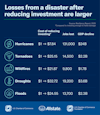
In June 2024, the organizations released The Preparedness Payoff: The Economic Benefits of Investing in Climate Resilience, finding that every $1 invested in disaster preparedness saves $13 in damages, cleanup and economic losses.

Turning Insight into Action: The Levers of Resilience
For coastal towns, it is about more than rebuilding; It means rethinking infrastructure, land use, and emergency planning. In Hampton Roads, Virginia, for example, NASA Earth science is informing flood-risk models that guide smarter development.
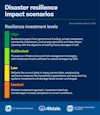
The Beyond the Payoffreport outlines six “Levers of Resilience” that you and your community can use to reduce risk and accelerate recovery—from infrastructure upgrades to community engagement. Investing in these areas today helps communities avoid far greater losses tomorrow and create safer, stronger places to live and work.

The report also explores four investment scenarios to show how different funding levels shape future economic health. As preparedness investment rises, communities can see job creation and growth, population gains, and higher income and productivity.

Closing the Gaps in Disaster Response and Recovery
Even as disasters grow more frequent and costly, current response and recovery systems aren’t keeping up. A recent survey conducted by the U.S. Chamber of Commerce, Allstate, and the Chamber Foundation found that nearly half of disaster resilience professionals believe coordination between public and private sectors is poor, with another 46% saying there’s room for improvement.

-
15%
say the U.S. is very prepared to manage a typical disaster
-
10%
say that federal grants and other funds are distributed very efficiently for disaster response
The findings point to the need for clearer processes, better resource allocation, and stronger collaboration, especially at the state and local levels. Federal aid remains vital, but without streamlined partnerships and community-centered planning, recovery efforts risk being slow, uneven, and ineffective. This all reinforces the urgency of investing in resilience before disaster strikes.
Additional Resources
U.S. Chamber of Commerce Policy and Advocacy Resources