Our September 2025 report, Beyond the Payoff: How Investments in Resilience and Disaster Preparedness Protect Communities, shows that investing in disaster resilience and preparedness can lead to significant economic savings. Developed in partnership with the U.S. Chamber of Commerce, Allstate, and the U.S. Chamber Foundation, the report demonstrates that every dollar not invested in disaster resilience today could result in lost future economic activity.
The study models four disaster preparedness investment scenarios, each assuming a disaster occurs in 2035. Key findings include:
- Every dollar not invested today results in an average of $22.60 in lost future economic activity across all disaster types.
- In some cases, losses exceed $30 for every dollar not spent on preparedness.
- Lower funding for resilience and disaster preparedness leads to much higher long-term costs.
The report’s methodology highlights how different funding levels can shape Charleston’s economic future.
For the Charleston region, every $1 invested in resilience and preparedness reduces economic costs by more than $16 compared to a scenario with decreased investment.
Factoring in damage and cleanup savings, each $1 invested yields more than $22 in total savings.
Savings ratios depend on several factors:
- Disaster size
- Investment required to halve the damage
- Resulting economic impact
Different disasters and locations yield different savings ratios.
Disaster Resilience in Charleston
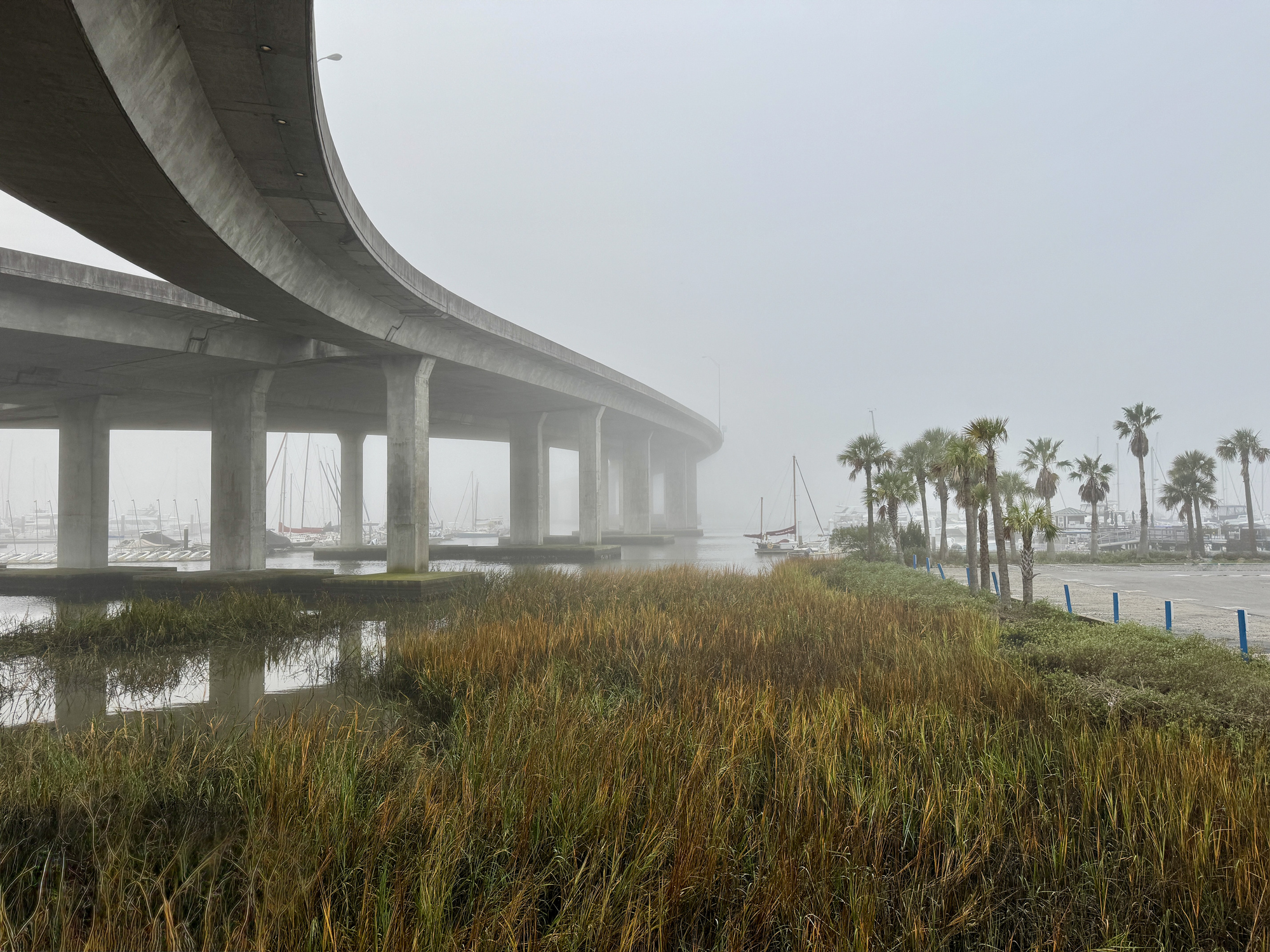
Charleston’s geography makes it vulnerable to hurricanes and flooding. The region faces increasingly frequent and severe storms, which strain resources and the local economy.
Flooding poses immediate risks, including drowning, injury, and exposure to chemicals and pathogens. Long-term effects include higher death rates from cardiovascular disease, infectious and parasitic illnesses, injuries, and respiratory conditions.
Charleston's resilience efforts focus on reducing vulnerability through a multi-faceted strategy through key initiatives including the Climate Action Plan, Flooding and Sea Level Rise Strategy, and partnerships with organizations such as the Preservation Society of Charleston to provide residents with resources for their properties. The city also invests in infrastructure, energy efficiency, and sustainability to build long-term resilience.
It’s essential for community members, small business owners, and decision makers to understand how investments in resilience and preparedness can reduce the economic costs of disasters while securing a more prosperous future for everyone.
Cost of a Storm with Flooding in the Charleston Area
Every $1 not invested in storm preparedness results in more than $16 in lost future economic activity.
In Scenario 1 (high investment), where investment is high enough to halve damages from a $1 billion flood occurring in 2035, the Charleston region would experience the following impacts:
- More than 1,600 jobs are lost
- Over 400 people permanently relocate
- Local GDP declines by approximately $280 million.
However, in Scenario 4 (limited investment), where investment falls by just $1 million over 10 years (or $100,000 annually), the economic toll more than doubles:
- More than 3,700 jobs are lost
- Over 1,100 people permanently relocate
- Local GDP declines by approximately $640 million
Investing more reduces the damage from a $1 billion disaster in Charleston
Chart shows investment or losses over 10 years
| | Scenario 1 | Scenario 2 | Scenario 3 | Scenario 4 |
|---|---|---|---|---|
| Invested or Cut | $102 million | $50 million | No Change | (-) $1 million |
| Jobs Lost | -1639 | -2559 | -3235 | -3765 |
| Population Lost | -449 | -752 | -982 | -1143 |
| GDP Lost | -$280,000,000 | -$430,000,000 | -$550,000,000 | -$640,000,000 |
| Ratio of Savings vs. Investment | NA | $8.65 | $8.63 | $16.12 |
| Job Gains from Investment or Losses | 57 | 28 | NA | -56 |
| GDP Gains from Investment or Losses | $10,000,000 | $4,000,000 | NA | -$100,000 |
Compared to Scenario 1, Scenario 4 means an additional 2,100 jobs lost, 700 more people displaced, and $360 million in added GDP losses. These figures do not include the billions in infrastructure damages and cleanup costs.
Scenarios 2 and 3, which model moderate and current investment levels, also reduce long-term economic losses, but not as significantly as Scenario 1.
Overall, the data shows that a community could incur a cost of $16 for every dollar not invested in disaster resilience. For a detailed breakdown, see the Methodology.
Additional recommendations and disaster scenarios are available in the full report. The Beyond the Payoff study builds on research first published in the June 2024 study, The Preparedness Payoff.
Report prepared in partnership with: