Published
September 22, 2025
America’s workforce is facing an urgent test—and a new survey from the U.S. Chamber and College Board found that many hiring managers feel that high school graduates are not up the challenge. But getting the right combination of education, soft skills, and experience can make these graduates better prepared to enter the workforce.
According to the New Hire Readiness Report 2025, most hiring managers feel that high school grads are not ready for work:
-
Four in five (84%) surveyed hiring managers agree that most high school students are not prepared to enter the workforce.
- A strong majority (80%) agree that current high school graduates are less prepared to enter the workforce compared to previous generations.
New Hire Readiness Report:

Talent Boosters: Internships, Soft Skills, Business Courses
There are many things high school grads can do to make themselves better prepared for the workforce, the survey finds.
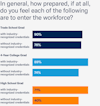
For one, hiring managers view trade school or four-year college grads as much more prepared for work. They also feel that career-focused high school courses and work experience—like internships—help make early-career professionals much more prepared for work:
- Hiring managers cite trade schools (40%) and 4-year colleges (37%) as top ways to acquire early-career skills.
- Most (89%) hiring managers believe experience is more valuable than formal education and say that internships (46%) are a leading way for students to gain early-career skills.
- The vast majority (92%) of hiring managers said there should be more business courses in high school.
It’s not all about education and experience though—harder-to-quantify “soft skills” also matter, with many hiring managers highly valuing these skills:
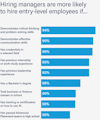
- At least nine in ten hiring managers say that they are more likely to hire an entry-level employee that demonstrates critical thinking/problem solving (94%) or effective communication skills (90%).
- Nearly all believe it is important that their employees learn communication (98%), decision making (97%) and collaboration (94%) before entering the workforce.
The Most Sought After Skill: Financial Literacy
The single skill that hiring mangers most highly value is financial literacy: The ability to do budgeting and understand borrowing, credit, and debt.
In fact, almost all hiring managers agree on this topic:
-
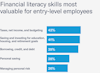
Nearly all (96%) hiring managers say that financial literacy skills are valuable for employees who are just starting their career, including 61% who find them very valuable.
- Among those who find financial literacy skills valuable, taxes, net income, and budgeting (42%); saving and investing (41%); and borrowing, credit, and debt (39%); are seen as the most valuable financial knowledge for entry-level workers.
Closing the Gap
To help close this work-readiness gap, College Board is developing new AP Career Kickstart courses that are aligned with industry competencies, beginning with AP Business with Personal Finance and AP Cybersecurity. These challenging, college-level courses are designed to build professional career skills and student confidence.
In the survey, 90% of hiring managers say they believe that the AP Business with Personal Finance course will have a positive impact on preparing high schoolers to enter the workforce.
To date, AP Business with Personal Finance and AP Cybersecurity have been approved by 13 states and work is underway with the remaining states to bring the courses to students nationwide.
For this survey, College Board and the U.S. Chamber of Commerce surveyed 500 hiring managers across a range of small, mid-sized, and large companies on perceptions of preparedness for entry-level employees.
Read the full New Hire Readiness Report 2025 here.

About the author

Thaddeus Swanek
Thaddeus is a senior writer and editor with the U.S. Chamber of Commerce's strategic communications team.