Small business takeaway:
- DIY, affordable luxury is reshaping consumer behavior and driving business growth — evidenced by three growing startups. Pure Daily Care has leveraged TikTok-driven influencer strategies to make professional skincare accessible at home. Ordo is disrupting oral care with high-quality, budget-friendly products. And Eleni’s Kitchen taps into global food trends, offering Ethiopian cuisine for affordable, authentic dining. These business strategies demonstrate how innovation can address consumer demand for upmarket services and experiences at affordable price points.
Startups Pure Daily Care beauty, Ordo oral care, and Eleni’s Kitchen are delivering bespoke products and services typically associated with pricey, on-site experiences, from a restaurant meal to a spa-style facial, that can be accomplished cost-effectively and conveniently at home.
Here, the three founders shared with CO— how their DIY, affordable-luxury business models are paying off and fueling growth.
Pure Daily Care: Maximizing creators, viral content, and affiliates to drive home med spa sales
Patients spend an average of $527 during a medical spa visit, according to data from AmSpa, the American Med Spa Association. But Pure Daily Care, a professional-grade home skincare line launched by Dave Dama and Arsalan Rahbarpoor under parent company Onyx Global Group, is capitalizing on e-commerce and influencers to bring some of those services home.
An Amazon-first strategy benefited Pure Daily Care, but pandemic-era stay-at-home behavior shifts propelled it into a TikTok viral sensation with its flagship product, the NuDerma High Frequency Wand. With spa or dermatologist visits ground to a halt, people embraced at-home skincare, posting videos of themselves using the wand (available in anti-acne, antiaging, professional, and clinical models) to help firm and rejuvenate skin. By early 2021, the brand had amassed 15 million views.
When Jonathan Cohen, Chief Marketing Officer for Pure Daily Care, joined that year, bringing a background in e-commerce and marketing with companies like Dermalogica and Lancer Skincare, he set out to amplify that virality. This predated TikTok Shop or whitelisting, a now common practice where an influencer grants a brand permission to access and promote content directly from the influencer’s handle as a paid ad campaign to reach new audiences. So, Cohen got creative, scripting and developing his own videos that mimicked the viral ones.
“We created a second wave viral [strategy] but controlled it,” explained Cohen, who wrote scripts with common phrases and sound bites from the most viewed Pure Daily Care viral content. “We knew it was unique and hadn’t been done before,” he added.
Cohen also recognized the halo effect of more TikTok views boosting Amazon sales. As the brand’s social media presence grew, the customer base grew beyond people in their 20s and 30s to include those over 40. (NuDerma is for anyone who gets facials, regardless of age, Cohen emphasized.)
Pure Daily Care has since launched on TikTok Shop, experiencing several growth spurts during key promotional periods. It saw a fivefold sales increase in July 2025 over the previous month — ranking among the top 10 personal care shops. TikTok Shop is now Pure Daily Care’s No. 2 sales channel, after Amazon.
Working with creators and affiliates advances success on TikTok Shop, which wants brands to release hundreds of new video content pieces weekly. Pure Daily Care now collaborates with over 500,000 creators plus a new affiliate agency that helped initiate 700 new partnerships with high-impact influencers. Since 2020, NuDerma’s views on TikTok have reached over 1 billion for all videos, products, and livestreams combined.
“Creators are like CMOs,” said Cohen. “We learn from them.”
[Read more: Inside the Viral Growth Strategies That Are Driving 3 Brands' Sales Success]

Ordo: Bringing high-quality, affordable, everyday oral care to the masses and disrupting the big guys
Consumers are often overwhelmed in the oral care aisle, puzzled by each product’s attributes and what meets their specific needs at a price they can live with. At least that was the contention of Barty Walsh, Founder and CEO of Ordo, when he set out to develop a solution: a line of sonic and electric toothbrushes, water flossers, toothpaste, and mouthwash designed to offer high-quality, more affordable oral care to more people.
Since starting in the U.K. and growing internationally, Ordo has expanded in the U.S. market online and in brick-and-mortar retailers at Walmart, CVS, Target, and Amazon, with more mass merchant and smaller nontraditional outlet expansion planned.
Walsh’s own trip to the dentist a few years ago was the impetus for the brand when he discovered he, like 3.5 billion people on the planet, was dealing with oral health disease. Proper oral hygiene can reverse many conditions if a person can access what they need, according to the American Dental Association.
Walsh had been using a manual toothbrush but was advised that electric options were better. He soon realized that choices and price points were daunting among electric and sonic brushes. (Electric toothbrushes use a rotating head, believed to be more effective at cleaning than manual. Sonic toothbrushes use high-frequency vibrations to clean hard-to-reach areas, believed to be the most effective option.)
“Most people use manual, partly because of price and partly because of confusion,” he said. “It was unclear what I needed as a consumer.”
Ordo was designed to stress the basics: Brush properly for two minutes, two times a day. “It doesn’t go much deeper than that,” said Walsh.
The magic formula was achieving the best level of cleaning combined with affordability. For example, Ordo’s most expensive item in the Sonic Lite line is $50, and the results are at the same level as a $150-$200 item from competitors, according to Walsh.
Startups Pure Daily Care beauty, Ordo oral care, and Eleni’s Kitchen are delivering bespoke products and services typically associated with pricey, on-site experiences ... that can be accomplished cost-effectively and conveniently at home.
“Why should someone who can’t afford it not have access to quality? This is a healthcare item as well as personal care.”
Nudging into a dominated market was not easy. Oral care is a category that is monopolized by two major brands globally: Oral-B, from Procter & Gamble, which is reported to comprise 51% of the U.S. electric toothbrush market alone, and Philips, with a reported 23% U.S. market share. To date, Ordo’s global growth strategy is delivering 250% year-over-year growth since the company’s launch.
Word of mouth (pun intended) helped build acceptance. Walsh founded the company in 2018 and began by reaching out to dental clinics in the U.K., getting dentists on board with the products. This helped build an audience for Ordo before launching in U.K. retail stores in 2019.
Ordo started selling internationally in 2023, first expanding to Australia, New Zealand, South Africa, the United Arab Emirates, and Europe, and since late 2024, the United States, where the oral care market is valued at $10.3 billion, says Statista.
As it builds its U.S. presence, the under-tapped oral care market for kids, tweens, and teens is where Ordo plans to concentrate with products like its Sonic Lite line and a partnership with Squishmallows, the hot stuffed toys brand, to license some of its popular animal designs for rechargeable or battery-operated toothbrushes aimed at kids and teens.
“If you get them young, they have less expensive dental procedures down the road,” said Walsh.
[Read more: How Fast-Growing Oral Care Disruptor Ordo Broke into Big Retail]
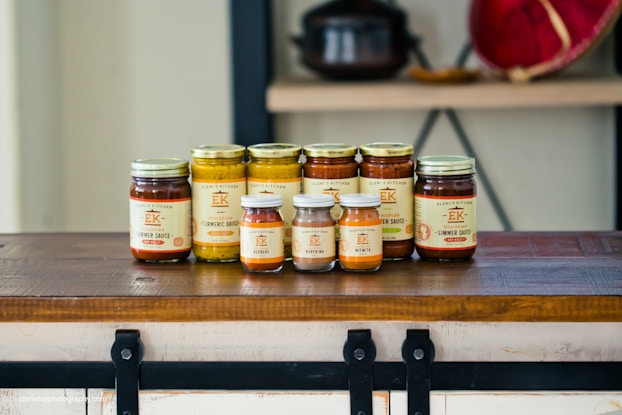
Eleni’s Kitchen: Ethiopian sauces and frozen injera bread help recreate travel and restaurant experiences in a convenient, budget-friendly way
Amid reports that 71% of Americans are concerned economic conditions will affect their ability to travel and that food inflation is leading U.S. consumers to cut back when dining out, products that help shortcut the way to restaurant-level global cuisine are in vogue.
This cooking convenience trend cuts across a swath of categories, but ready-to-use meal starters, bases, and other sauces are at the forefront. According to Market Research Future, global research analysts, the size of the global cooking sauce market at retail is estimated to rise from an estimated $28.9 billion to $43.2 billion by 2032. Growth in the category — which includes pasta and pizza sauces, stir-fries, and marinades — is driven by rising demand for convenience and variety, as well as authenticity in global cuisine, said MRF’s Global Cooking Sauce Market Report.
Eleni’s Kitchen is an example of sauces and meal starters that allow consumers to experiment with bold international flavors from Asia, the Caribbean, and Africa. The impetus behind the line of Ethiopian sauces, spices, and simmer sauces was authenticity and ease of use.
“To create an Ethiopian stew, you have to start with the sauce as a base, which is complex, time-consuming, and requires a lot of ingredients that need to be sourced through ethnic markets,” said Eleni Woldeyes, Owner.
The simmer sauces — available in mild, hot, and turmeric varieties — provide that in one jar as a base for a variety of stews. And at around $10 per jar, budget-stretched consumers can enjoy it for less than the cost of a restaurant meal.
Eleni’s Kitchen also provides recipes online and information on labels — musts, Woldeyes believes, to address the learning curve that accompanies global cooking sauces.
“Customers have some awareness of the cuisine if they tried it [abroad or] in a restaurant,” she noted, but most have not attempted to recreate it from scratch at home.
Frozen meals may be the ultimate convenience food, but the doors have opened for innovations beyond typical microwaveable meals. Woldeyes, for instance, noted that her frozen injera, a sour fermented spongy flatbread made with teff flour, a staple of Ethiopian cuisine, is her most popular and easily understood product because of its heat-and-serve simplicity.
Retailers are continuing to see a push for cooking convenience products. The trend is really a wider variety of foods from all over the world for increasingly sophisticated palates,” Cathy Hamilton, Co-owner of Putnam Market, a specialty grocer in Saratoga Springs, N.Y., told CO—. “And that comes in a lot of formats and categories.”
[Read more: Cooking Convenience Trends Are Driving Sales for Food and Beverage Companies]
CO— aims to bring you inspiration from leading respected experts. However, before making any business decision, you should consult a professional who can advise you based on your individual situation.
CO—is committed to helping you start, run and grow your small business. Learn more about the benefits of small business membership in the U.S. Chamber of Commerce, here.
Enroll today!
Sign up for Small Business B(AI)sics, our free AI training course, designed for small businesses like yours. Learn the basics of AI in just 30 minutes, plus get resources to help you apply AI skills at your business today.