Small business takeaway:
- Consumer trends such as snackification, the rise of nonalcoholic beverages, and brand storytelling are reshaping the food and beverage sectors, offering valuable insights and strategies for companies across industries. Businesses that embrace wellness-focused innovation and authentic narratives can unlock growth opportunities, connect with diverse audiences, and adapt to evolving consumer preferences, demonstrating the power of cultural resonance in driving market success.
Trends in what consumers eat and drink, along with shifts in how they expect to interact with food and beverage brands, are opening up new growth opportunities for businesses.
Snackification is altering meal patterns and expanding product development in the $39 billion salty snack category, with global flavors and nutrient-dense offerings driving growth.
And in beverages, consumer interest in both wellness and artisanal mocktails are driving sales of nonalcoholic drinks.
For both the beverage and snack businesses, marketing that centers on bringing the story and people behind a brand to life is winning with food shoppers today, according to interviews with brand founders and analysts.
Huge U.S. snacking culture is exploding with global flavors for taste-adventure–seeking consumers
The snackification trend of replacing traditional meals with more frequent snacks is reshaping how U.S. consumers eat and expanding the snack category with healthful, creative, and global-flavored options.
Snacks are a massive segment in the United States, generating $39 billion in sales with 95% of consumers reporting they consume snacks, according to the US Salty Snacks Market Report from market researcher Mintel.
Younger adults, especially, are blurring the lines between meals and snacks, noted Mintel, creating business opportunities for nutrient-dense snacks that support healthy eating, as well as convenience.
But, while nutrition is an important factor, indulgence is still a big part of snacking with flavor being key. Another Mintel report, US Trending Flavors and Ingredients in Salty Snacks, names miso (Japanese soybean paste), gochujang (Korean chili paste), and Hatch chilis (an ingredient popular in many Mexican dishes) as emerging examples that underscore consumer interest in global flavors.
Global flavors surged amid pandemic-era stay-at-home mandates when travel was not allowed, and the confluence of snacking culture and a desire for taste adventures continues to create a pathway for more brands to share their cultural roots and nostalgic food memories through snacks.
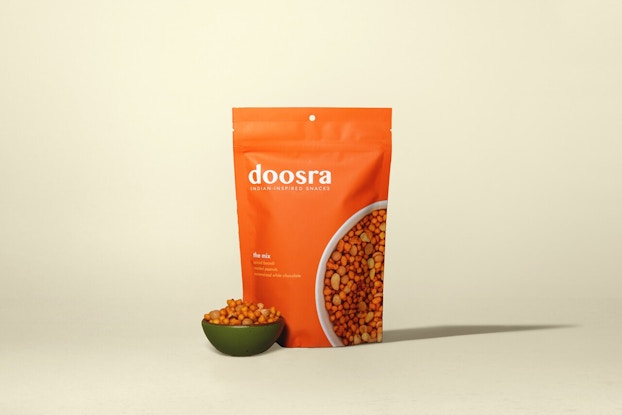
Doosra Founder Kartik Das realized Indian snacks, one of his favorite parts of the country’s food culture, didn't exist outside of traditional Indian grocery stores, where aisles of products pointed to the plethora of options. Das created Doosra, a modernized take on classic snacks that features a mix of chickpea puffs, or boondi, roasted peanuts, and caramelized white chocolate mixed with a masala spice blend.
“Doosra” means “different” or “other,” which was exactly what Das, who was born in Chennai, India, raised in Singapore, and attended culinary school in London, set out to accomplish. “I didn’t want a completely traditional snack,” he said. “I wanted traditional ingredients and flavors but combined with other ideas I learned in culinary school.” The result, he explained, creates a snack that isn’t overly salty or spicy.
Other companies also are aiming to share culture and nostalgia through snacks. Examples include Daniel Schwartz, a native of Monterrey, Mexico, who wanted to capture the tastes and spirit he remembered from childhood with his Chuza brand of dried fruit snacks dusted with a salty, spicy, citrusy chili powder that evokes Mexican flavors.
Some brands are introducing unexpected flavors to classic products. Tochi Snacks, for example, has a line of Asian-inspired popcorn in flavors like Milk Tea, Matcha, and Salted Egg. Its Founders, first-generation Asian American siblings Ian and Marc Seah and Dina Shi, aimed to infuse flavors inspired by their Singaporean roots (“tochi” means “land”) into functional snacks.
Many snacks that spotlight international flavors are also positioned as more healthful. “There is a small but growing subset of consumers, especially in the United States, who are increasingly interested in discovering that the source of food makes a huge difference in terms of quality,” said Patrick Johnson, Co-founder of Ziba, a line of sustainably grown and harvested nuts and fruits from Afghanistan used in sweet and savory snacks like trail mix.
[Read more: Global Flavor Trends Drive New Sweet and Salty Snack Innovations]
Trends in what consumers eat and drink, along with shifts in how they expect to interact with food and beverage brands, are opening up new growth opportunities for businesses.
Nonalcoholic adult beverages gain mainstream appeal as consumers look to moderate alcoholic intake and indulge in artisanal mocktails
A consumer shift toward nonalcoholic beverages—increasingly available in high-quality, craft and artisanal varieties—is transforming the adult beverage market as well.
Nonalcoholic beverages are a booming subset of the total $260 billion U.S. alcoholic beverage segment and the growth outlook is robust. IWSR, a global market researcher for the alcoholic beverage industry, forecasts category sales will hit $4 billion by 2027.
Nonalcoholic brands from large companies account for the most sales, and those businesses are upping resources in the category, said Marcos Salazar, CEO of the Adult Non-Alcoholic Beverage Association. “But innovation is [also] coming from smaller companies.”
Beer is the category driver with 85% of sales, but spirits—including ready-to-drink cocktail alternatives—are the fastest growing segment and where innovation is prevalent, said Salazar.
Data from market researcher Nielsen IQ shows the nonalcoholic RTD spirits segment grew a whopping 171% in the past year. Edna’s, Smashd (formerly Mixoloshe), Big Hat, and Craftwell Cocktails are just some canned RTD cocktail alternatives to hit the market.
The health-and-wellness halo, and its associated mindfulness about consumption, catapulted the category. “Consumers are making more purposeful choices, including whether to eliminate or moderate alcohol intake,” said Adrienne Krausz, Co-owner of the Dry Goods Beverage Company, an online retailer of nonalcoholic beverages.
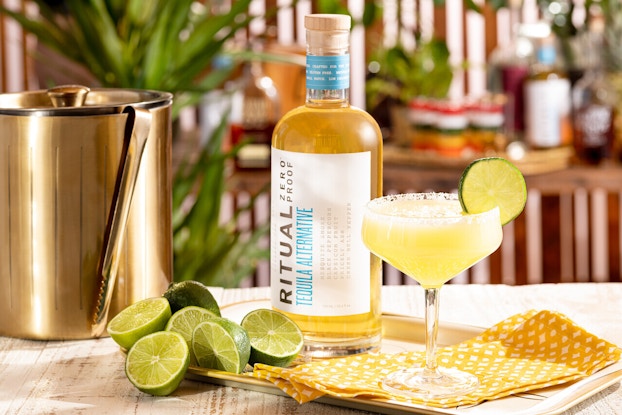
“Optionality is a big part [of the category’s growth],” said Marcus Sakey, Co-founder and Chief Creative Officer of Ritual Zero Proof, a line of tequila, rum, whiskey, gin, and aperitif alternatives. “Just as you can’t go to a restaurant and not find vegetarian options, there is a feeling that you should be able to enjoy beverages however you choose.”
Like many producers, Ritual’s owners saw opportunity in the dearth of adult alcohol-free beverages. “It used to be that [soda] was the [only] alternative and that’s sad as an adult,” said Sakey.
Wellness and customized options help fuel nonalcoholic beverages appeal. Most of these consumers—93%—also purchase wine, beer, and spirits that contain alcohol, using both but for different occasions, switching out alcoholic drinks with lower-proof beverages, for example, or opting for nonalcoholic alternatives on weekdays. “The nonalcoholic alternative consumer wants to accentuate an occasion and enjoy it but not at the expense of their sleep or rest or workout,” said Sakey.
The adult alcohol-free beverage category has two segments: direct alternatives that mimic as closely as possible the taste of traditional wines, beer, and spirits, and designer alternatives, those that offer similar taste notes without exactly replicating them, explained Salazar.
Direct alternatives steer sales, according to the NIQ data, with well-established brands like Athletic Brewing craft beer, Fre wines, and Ritual Zero Proof.
It is in the designer alternative segment where younger companies are experimenting with herbs, botanicals, and other ingredients. For Bitter for Worse, for example, offers The Saskatoon, reminiscent of a red wine and made with rhubarb root and dried chamomile flowers, and Smoky No. 56, which evokes warm whiskey notes but is made with maple syrup, apple cider vinegar, black tea, dandelion root, and orange peel among other ingredients.
What’s next for adult nonalcoholic beverages? “A complete mainstreaming of the category,” said Sakey, who likens it to the ascent of dairy alternatives. “They were first created for diet intolerances and now they are available everywhere,” he continued. “We’ll see the same thing with nonalcoholic alternatives.”
[Read more: Innovation and Artisan Options Driving Opportunity in Adult Nonalcoholic Beverages]

Brand storytelling increasingly resonates with food and beverage shoppers across categories
Game-changing food and beverage trends extend beyond consumption habits to what information consumers seek from the brands they support. Understanding the story and people behind the brand can be as important as product attributes.
For Josh Cellars, the number one premium table wine in the county, demystifying wine was important to expand the brand’s reach, especially to younger consumers.
Originally, Josh Cellars’ core customers were Gen X and baby boomers. Then the brand went viral in 2024 with a series of memes that played on the common name Josh and the brand’s reputation as a value wine.
Josh Cellars also became a regular at music festivals and has been featured on shows like Top Shelf Chef and Yellowstone, as well as in skits on Saturday Night Live.
“Millennials and Gen Z saw us on social and looked behind the curtain to see that we were genuine, not a concept brand made up by an agency,” said Founder Joe Carr, who named the brand after his dad, a lumberjack, U.S. Army veteran, and volunteer firefighter who was nicknamed Josh in his stock car–driving days.
“Brands can get discarded. People move on. Josh Cellars is based on a real person and I’m a real person behind it. We aren’t complex; we’re personal and not intimidating. Customers respond to that.”
The brand’s affordable price point and unpretentious image is also integral to its story. Today, Josh Cellars produces upwards of 7 million cases annually, with most bottles priced around $20 and under.
Via storytelling, Carr is on a mission to remove wine’s highbrow reputation and instead position it as something to enjoy at the beach, a barbecue, or a family gathering.
To help communicate that down-to-earth vibe, Josh Cellars began offering custom labels where shoppers upload a photo and message and the labels are shipped to them to apply to bottles, for example. (“I see a lot of dogs,” Carr laughed.)
[Read more: How Josh Cellars Grew to Dominate the U.S. Wine Category, Selling Over 7 Million Cases a Year]
CO— aims to bring you inspiration from leading respected experts. However, before making any business decision, you should consult a professional who can advise you based on your individual situation.
CO—is committed to helping you start, run and grow your small business. Learn more about the benefits of small business membership in the U.S. Chamber of Commerce, here.
Enroll today!
Sign up for Small Business B(AI)sics, our free AI training course, designed for small businesses like yours. Learn the basics of AI in just 30 minutes, plus get resources to help you apply AI skills at your business today.