

Why it matters:
- Underserved or overlooked markets often have less competition, giving business early entrants a chance to shape the category and build brand loyalty.
- Consumer needs in underserved spaces are frequently unmet, opening the door for founders to introduce better experiences and solutions.
- By tackling thorny, complex, and historically stagnant industries, deathcare startups Better Place Forests, travel site Whimstay, and fulfillment solution One Rail are reaping financial gains once market demand grows.
Building a successful business sometimes entails boldly forging into areas others may stray away from. For example, some would-be founders would hesitate to create a product or service in an industry that feels risky or an area that’s just too complex for most people to wrap their head around.
But one person’s risk can be another’s opportunity. Launching a business in an underserved market, where customer needs are unmet or competition is sparse, can offer major strategic and financial advantages. With fewer players in the space, it’s easier to capture attention and build lasting relationships. Attracting loyal customers, establishing brand recognition, and creating a strong foothold can be more achievable.
With fewer alternatives, customers may also be willing to pay more while the potential to scale quickly once you’ve validated your business model can be higher in untapped markets. From rethinking deathcare to creating a niche marketplace for discounted travel to filling huge demand in last-mile delivery, these three brands took calculated risks in underserved or overlooked industries, crafting creative solutions and turning them into thriving businesses.
Seeing rising demand for greener memorial options, Better Place Forests reimagined end-of-life care with a nature-first model and B2B expansion
Deathcare startup Better Place Forests entered the market after spotting a shift in consumer values toward eco-friendly, personalized end-of-life options, with over half of Americans now choosing cremation over a traditional cemetery burial, a preference expected to accelerate. By 2045, some 81% of Americans could decide to be cremated, up from 60% in 2023, according to the National Funeral Directors Association.
The startup was an early provider of nature-based end-of-life services, giving people an eco-friendly alternative to traditional cemeteries. Over the last decade, Better Place Forests purchased over 1,000 acres of land, creating protected forests whereupon a person’s death, the deceased’s ashes and local soil are placed under a tree. Steadily, the brand built up to operating nine memorial forests across six states, having served over 6,000 families.
“The trend is moving away from traditional burial. And we're not just an alternative to cemeteries,” said Better Place Forests’ CEO Adam Tibbs. We’re creating an end-of-life set of solutions that help people regardless of where they are.”

The company strategically priced its memorial trees starting at $5,900, well below the median price of a funeral with burial and viewing costs of $7,848, according to the NFDA. Each burial includes a memorial marker, and pet ashes can also be scattered with its owner’s too, differentiating it from other end-of-life options.
A key component of the business’s strategy was to provide digital conveniences while still delivering a personal touch. Its digital end-of-life guides serve as an entry point. Then, once customers reach out, human “buying executives” walk customers through the process, address questions, and organize in-person visits for people who want to walk through a forest before they buy.
Meanwhile, Better Place Forests has taken a counterintuitive approach by partnering with organizations that might initially seem like competitors. The start-up has expanded nationwide by partnering with about 250 funeral homes, which offer a natural burial option through Better Place Forests with exclusive pricing. This B2B approach taps into the fact that many people contact their local funeral home first after a loved one’s death.
Entering a traditional and somewhat thorny market with a fresh approach, however, didn’t come without its challenges. The first few years, acquiring old grove forests, creating trail systems, and caring for the land came at a massive expense. Ongoing maintenance is pricey too. The startup has managed to raise almost $80 million toward its efforts, the most funding of any green interment company to date.
New strategies and partnerships have helped alleviate early issues too. For example, the company also partners with green cemeteries, offering its services on used land. “It’s helping us expand without having to go through the capital-intensive process of buying, conserving, and developing the land," said Tibbs.
[Read more: How a Nature-Based End-of-Life Startup Is Innovating in the Deathcare Industry]
These three brands took calculated risks in underserved or overlooked industries, crafting creative solutions and turning them into thriving businesses.
Whimstay seized on inefficiencies in the short-term rental market, turning unrented homes into affordable, last-minute travel deals
Serial entrepreneur Ben Jamshahi turned his struggle to keep his Hawaii and Lake Tahoe vacation homes above a 40% occupancy rate on platforms like Airbnb and VRBO into Whimstay, a business that identifies empty vacation rentals and negotiates discounted rates directly with property managers and owners. The company helps property owners and travelers underserved by short-term rental booking platforms.
Just before launching his company, Jamshahi attended the Vacation Rental Management Association International Conference, where he spotted a clear opening to do things differently in the traditional vacation-rental model business. The challenge with online booking sites like Airbnb, he realized, is it becomes more difficult to get noticed as the number of rentable properties exponentially grows. Properties sit unrented since they’re lost in the shuffle.
“Data was fragmented, the players weren’t communicating with each other, and there was no consistency in pricing,” he said. “We saw [a] lot of opportunities to be able to consolidate the fragmentation and provide a niche site and marketplace that vacation homeowners and property managers could use to increase their occupancy.”

With his solution, travelers benefit from a cheaper vacation, while owners don’t sit on empty properties. Jamshahi tailored services to cater to millennials’ and Gen Z’s spontaneous travel behaviors and an increase in remote employees who may work from the ski slopes or a beach cottage. Features appeal to travelers who value flexibility, ease of booking, and competitive pricing. His goal is to get to 100% occupancy.
The company works with licensed property managers to provide special pricing on homes that would otherwise sit vacant, concentrating on stays of 30 days or fewer. When Whimstay launched in 2018, it featured only a few hundred listings. Since then, its staff has grown to three times its original size to support increasing demand, and the company has secured funding for its growth, including two equity-crowdfunding rounds on StartEngine.
Property managers using Whimstay have reported substantial increases in occupancy rates, according to Jamshahi. For instance, one property manager in Truckee, California, experienced an occupancy increase from an average of 48% to 83% after adopting Whimstay's last-minute pricing model.
Meanwhile, a series of business-to-business (B2B) relationships with companies including Wyndham, Booking.com, and Expedia Group have helped Whimstay vastly grow its property network to nearly half a million listings across North America, Canada, Mexico, and the Caribbean.
“At the end of the day, we’re a marketplace,” Jamshahi said, “and we’re able to add a lot more inventory because of our partners. I’m very excited about what we've built.”
In a crowded logistics landscape, OneRail tackled the still-underserved last mile with an AI-powered platform and real-time intelligence
With his startup OneRail, CEO and three-time startup founder Bill Catania is tackling a big logistical pain point that incumbents haven’t fully solved, offering innovative tech-driven solutions.
His company focuses on “last mile” logistics, managing the final stretch of getting products into customers’ hands. This stage is typically the priciest — and often the most complex — part of the delivery chain, and it’s surged in importance with the boom in e-commerce and consumers’ growing demand for fast, seamless service.
Traditional logistics companies often focus on bulk, long-haul shipments and leave the last-mile segment underserved. Catania recognized the opportunity to fill the gap and solve a bottleneck for retailers with reliable last-mile delivery fueled by innovation. The company’s platform uses a blend of artificial intelligence, real-time data, and automation to streamline last-mile delivery.
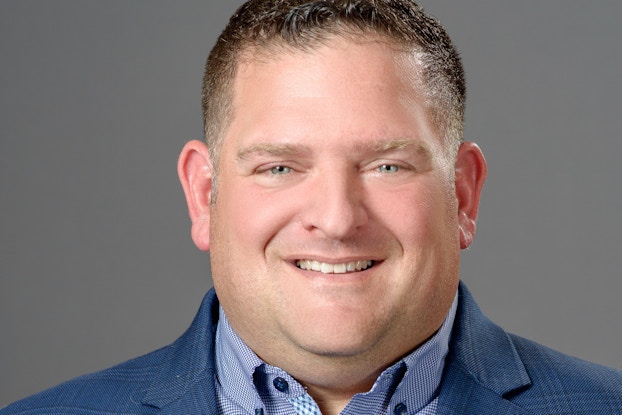
Catania’s venturing into the still-underserved space managed to catch the eye of investors. OneRail has secured $109 million in funding over the last several years, including a $42 million series C round led by Aliment Capital. Fewer companies reach this third, often final, venture-funding milestone today — it’s meant for businesses with strong growth trajectories and clear plans for an exit, whether it’s an initial public offering or an acquisition, according to Catania.
“Over the years, we’ve had numerous sources of investors,” said Catania. “We’ve been fortunate to have a good mix of angel investors, early stage, venture capital, growth venture capital, some PE [private equity], and even customers have invested.”
To be successful in fundraising, Catania said, founders need to have adequate proof that they’re going to provide true value to their customers.
“What it took was evidence that we had a business that enterprise-level customers would pay for, that companies weren’t going to call couriers instead, that they needed our solution,” Catania said. “Investors had to believe that we could pull it off.”
The best advice for founders looking to secure funding, added Catania, is to truly differentiate your product or your service, to “execute and create value,” and then the funding will fall into place.
[Read more: How 3 Startups — Duckbill, Harbor, and OneRail — Landed Funding Windfalls]
CO— aims to bring you inspiration from leading respected experts. However, before making any business decision, you should consult a professional who can advise you based on your individual situation.
CO—is committed to helping you start, run and grow your small business. Learn more about the benefits of small business membership in the U.S. Chamber of Commerce, here.
Enroll today!
Sign up for Small Business B(AI)sics, our free AI training course, designed for small businesses like yours. Learn the basics of AI in just 30 minutes, plus get resources to help you apply AI skills at your business today.


