Small business takeaway:
- Talkspace, the teletherapy platform with 6,000 licensed professionals, is treating AI less as a stand-alone chatbot than as a guided layer across mental health care— powering personalized post-session audio and summaries, everyday support, and risk escalation when needed. The larger lesson: AI gains business value when it improves the customer experience, builds trust through safeguards, and is tied to a business model that can scale.
For the last few years, like many large companies, digital mental health platform Talkspace has woven artificial intelligence into its workflow, freeing therapists’ time to focus on patients and personalizing care.
AI now helps Talkspace therapists draft intake and post-appointment summaries, and generates individualized, three-to-five-minute podcasts for patients after each session that are packed with personalized tips.
“The podcasts have been very popular,” Talkspace Chief Executive Officer Jon Cohen told CO—. The impact on engagement has been so significant that clients who listen to their post-visit podcast are 30% more likely to book their next session than those who don’t. Now, the company is pushing further into AI with Tee, its AI-powered mental health guide, which Talkspace markets as a safer, purpose-built alternative to turning to general-purpose AI platforms for mental health advice.
The launch has come as an increasing number of patients supplement their time with a mental health professional with advice from AI. Nearly two in five psychologists have had conversations with patients who used AI to self-diagnose, according to the American Psychological Association’s Chatbots and Mental Health Survey. In its “AI as a Healthcare Ally” report, OpenAI says that of ChatGPT’s more than 800 million weekly active users, one in four submits a prompt about healthcare weekly.
“Millions of people a week are having conversations about mental health–related issues with bots,” said Cohen. “The problem is, they were never built for it, and there’s been bad advice, bad results, and some real disasters. We’re trying to set a standard for what an AI agent should be for mental health support. We’re in the market because people need a safe alternative.”
With Tee, Talkspace developed what it calls a “safe AI mental health guide” for consumers that it markets as “a private place to talk about anything, at any time.” The tool isn’t therapy, and it doesn’t diagnose, Cohen said. Instead, it functions more as a conversational agent. “It’s not a clinician,” he added.
Launched in early June 2026, it’s early days. But the company hopes the technology will help patients and ultimately help boost revenue. Health plan–covered sessions, versus self-play sessions, drove much of Talkspace's growth in 2025: The company completed 459,700 payor sessions in the fourth quarter alone, up 36% year-over-year, helping lift full-year revenue to $229 million, a 22% increase from the prior year.
[Read more: How 3 Health-Focused Startups Built Devoted Communities and a National Retail Presence]
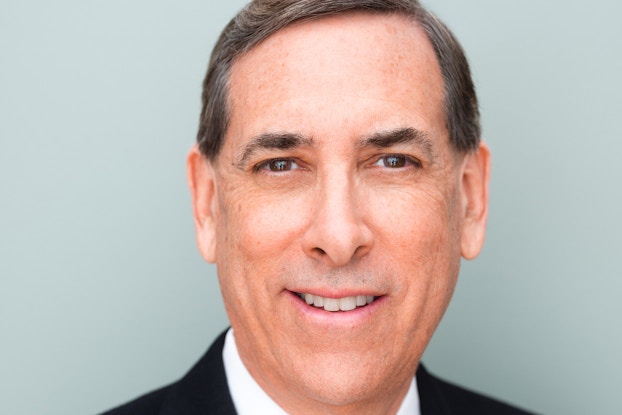
CEO says Talkspace’s profitable growth reflects ease of use. Now, AI will make it easier: ‘We’re a tech company that builds mental health solutions’
Founded in 2012, Talkspace has grown into one of the largest in-network virtual mental health providers, with some 220 million Americans able to access its services through their insurance plans, including through Medicare. It turned profitable in 2022, and Cohen pegs much of its success to the ease with which patients can join and use the Talkspace platform.
“We’re a technology company that builds mental health solutions,” said Cohen. “We were the first to bring therapy to text and messaging, and we’ve kept building from there.”
A year and a half ago, Talkspace used its anonymized data of patient interactions that users had consented to share to create its own large language model devoted to mental health. Tee was built on some 450 million therapy-related pieces of data, including clinical diagnoses and interventions, treatment goals, and appointment notes. Clinicians tested and trained the model.
Talkspace built in safety protocols, including algorithms that flag major risks like suicide, homicide, and substance use. Tee can also identify evidence of delusion, mania, hallucinations, disorganized thinking, eating disorders, or OCD. A final guardrail: consumers have to be 18 years or older to use Tee.
“We have ways, based on the content of the conversation, of identifying whether you’re really 18 years or older,” said Cohen.
If Tee flags a risk, the conversation is elevated to a human-in-the-loop live clinician, who decides if an intervention is needed. Interventions could range from scheduling a therapy appointment, to arranging emergency care, and even to sending the police to do a welfare check in extreme situations.
Talkspace says Tee was designed to meet HIPAA’s privacy and security standards, describing it as offering “HIPAA-grade” protections, though some legal observers have questioned whether AI mental health tools like Tee fully satisfy HIPAA’s requirements around de-identifying personal health information.
Initial data show people are engaging with Tee for a wide range of issues, including relationships, low self-esteem, anxiety or depression, grief, and worries about money.
[Read more: 5 B2B AI Startups That Are Helping Businesses Large and Small Drive Growth]
Millions of people a week are having conversations about mental health–related issues with bots...We’re trying to set a standard for what an AI agent should be for mental health support. We’re in the market because people need a safe alternative.Jon Cohen, CEO of Talkspace
Talkspace acquisition by Universal Health Services poised to fuel growth
For consumers, the first week of Tee is free. Then, Talkspace offers a subscription model, priced at $19.99 a month. But “we’re in the middle of trying to figure out what the right pricing model and commercialization strategy is,” Cohen said.
He envisions employers as future clients, offering Tee to employees through Employee Assistance Programs, or EAPs, as a less expensive way to get support. A key question for the ultimate profitability of Tee, though, is whether or not insurers will pay for patients to speak with an AI guide. Talkspace has built its business on contracting with insurance companies, employers, and health plans that then cover or subsidize therapy for their members or employees as a covered benefit.
“We’ve definitely begun the conversations with the payers,” Cohen said. “But I think, like everybody, they’re going to wait and see what the results are.”
Cohen is confident there’s plenty of demand for a dedicated mental health AI tool, even as Gen Z consumers, for one, have become more skeptical of the tech over the past year, according to a survey by the Walton Family Foundation, GSV Ventures, and Gallup.
While some consumers profess opposition to AI, the number of users says otherwise, Cohen said. He sees demand coming not just from individual consumers navigating everyday stresses but from large populations of people with shared conditions, such as women with postpartum depression or cancer patients who are looking for additional support.
Cohen also sees Talkspace’s pending acquisition by Universal Health Services for $835 million as a major growth driver for the company. The hospital and behavioral health operator includes more than 300 behavioral health inpatient facilities in the United States, creating a potential pipeline of patients with outpatient therapy and medication management needs.
“It’s great for both of us,” Cohen said of the acquisition. “We’re going to provide significant support for their outpatient services. They’re looking to us to be their solution. For us, it’s a huge uptick in the number of referrals we’ll get. For them, it’s a huge solution to what their patients need. It’s a win-win.”
The deal also gives UHS a built-in distribution channel for Tee, positioning it as a real alternative UHS can offer its own patient base, rather than a product Talkspace has to market cold. “There’s just a huge number of people this can apply to,” Cohen said. “The potential is very, very large.”
CO— aims to bring you inspiration from leading respected experts. However, before making any business decision, you should consult a professional who can advise you based on your individual situation.
CO—is committed to helping you start, run and grow your small business. Learn more about the benefits of small business membership in the U.S. Chamber of Commerce, here.
Enroll today!
Sign up for Small Business B(AI)sics, our free AI training course, designed for small businesses like yours. Learn the basics of AI in just 30 minutes, plus get resources to help you apply AI skills at your business today.