Faith Mabry
Speechwriter, Executive Communications
Updated
September 09, 2025
Published
September 09, 2025
It’s lift-off for the U.S. Chamber’s annual Global Aerospace Summit.
Day one of the three-day summit brought together industry and government leaders to discuss the most critical issues facing aviation, space, and defense. Aviation safety and modernization were top of mind for attendees on day one.
To advance American leadership in aerospace, panelists emphasized the need for strategic collaboration across key issue areas—including workforce development, infrastructure modernization, technology and cybersecurity, and smart regulation.
Whether you're catching up, were in the room or following along with us on X, LinkedIn, or Instagram, here’s your recap of the standout moments, themes, and takeaways that propelled us forward on the first day.
HIGHLIGHTS FROM DAY TWO: How Technology and Talent Will Define America's Aerospace Future
HIGHLIGHTS FROM DAY THREE: Securing U.S. Space Leadership via Innovation, Partnerships, Policy
Aviation Safety and Modernization at the FAA
Bryan Bedford, Administrator of the Federal Aviation Administration (FAA), kicked off the day by outlining the FAA’s ambitious modernization efforts. Administrator Bedford acknowledged the fatal crash in Washington, D.C., earlier this year as a “wake up call” for the agency to move quickly to improve safety and grow the aviation industry.
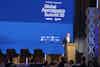
“We think about modernization as an investment, not simply an expense. When we invest in the [national aviation system] we increase the ability for the aviation industry to grow,” Bedford said.
He also singled out permitting reform as a critical piece of the FAA’s modernization efforts, noting that replacing copper wire connecting the FAA’s over 4,500 facilities with fiber will require trenching. “We really need Congress to help waive some of these difficulties we foresee to bring the [national aviation system] into a digital architecture,” he said.
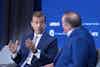
Guillaume Faury, CEO of Airbus, also underscored the importance of modernization in a wide-ranging conversation with Phil LeBeau, Auto and Airline Industry Reporter at CNBC.
“I think it’s absolutely essential to modernize air traffic management and the air traffic system that has become a weak spot on the system. We’re using technologies that are completely outdated. It’s a good investment, for safety, for punctuality and for competitiveness,” said Faury.
Nate Boelkins, President of Collins Aerospace’s Avionics business unit at RTX, talked about how their company is contributing to modernization efforts.
“We’re extremely excited to bring the technology forward that we’ve been working on for some time, whether that’s modern radar solutions, intuitive air traffic control stations, or a platform that’s going to be more adaptable for the future of automation solutions. We’re really excited and we’ve got 50,000 engineers ready to bring those solutions forward,” said Boelkins.
American Leadership in Global Aviation
The Chamber’s Board Chair Ross Perot Jr., Chairman of the Perot Companies and Hillwood, sat down with Neil Bradley, Executive Vice President, Chief Policy Officer, and Head of Strategic Advocacy at the U.S. Chamber of Commerce, to discuss his personal aviation accomplishments and his vision for the future of U.S. aerospace leadership.
Motivated by his desire to solidify America as a leader in aviation, Ross co-piloted the first ever around-the-world helicopter flight at just 23 years old. “This is what Americans do,” Ross recounts thinking when he heard an Australian pilot was trying for the record.
MORE ON PEROT'S WORK:Insights from an American Aviation Legend and U.S. Chamber Business Leader
As chair of the U.S. Chamber of Commerce, Perot seeks to support continued growth and innovation in aerospace. “It’s the U.S. Chamber’s responsibility to make sure we’re working with all the players in this great industry, to make sure the regulations are there, the funding is there… And we’re just getting started.”
Securing American leadership in aviation was also echoed by Adam Goldstein, Founder and CEO of Archer Aviation in a panel discussion with Cyrus Sigari, Co-Founder and Managing Partner at UP Partners. Sigari’s company is developing a new, all-electric vertical takeoff and landing aircraft and attributes Archer’s progress to strong government support.
“Americans need to lead in aviation,” Sigari said, highlighting the impact of the Trump administration’s executive order on advancing the drone industry.
Sharon L. Pinkerton, senior vice president for legislative and regulatory policy at Airlines for America, echoed sentiments that the aviation industry has an incredible story to tell and can serve as a model to other industries. However, she emphasized that there is more work to be done.
"I think we still have more work to do, there are individual agreements that are going to continue to be negotiated, and now we’re turning our focus to those to continue to advocate why this model has been successful and why it works," she said.
Workforce for the Future
Workforce development was another key theme throughout the day. Sen. Jerry Moran (R-KS), Chairman of the Senate Commitee on Veterans’ Affairs, discussed ongoing efforts in Congress to address current air traffic controller shortages and the need to improve education and training to meet the needs of the aerospace industry today.
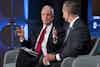
“What I’ve discovered in our efforts to encourage new business and to expand business in our state—what CEOs and procurement specialists, what supply chain managers are looking for is a workforce. Education and workforce training are the top priorities of mine and Kansans in regard to growing this industry, but also it’s what’s missing in our country generally,” said Senator Moran.
Labor and talent shortages across the aviation industry were also discussed at an afternoon panel of airport leaders moderated by Kevin Burke, President and CEO of Airports Council International - North America.
Jack Potter, President and CEO of the Metropolitan Washington Airports Authority, confirmed workforce shortages extend beyond air traffic controllers and into airport staff.
“We can’t get plumbers, electricians, it’s very hard. We’re in a very competitive environment. We're training our own because we can’t afford to do anything but,” said Potter, while also noting airport customs staff shortages.
Supportive Regulatory Framework
In addition to Senator Moran, several lawmakers from both sides of the aisle took the stage to discuss how Congress is thinking about the future of aerospace.
Sen. Kevin Cramer (R-ND), Co-Chair of the Senate Defense Modernization Caucus joined Rodney Davis, the Chamber’s Head of Government Affairs, to discuss the need for a regulatory framework that supports innovation.
“The key is regulation that protects but doesn’t stifle and then a culture that is willing to adapt to that and do what’s necessary,” said Senator Cramer.

Guests register for the first day of the 2025 Global Aerospace Summit
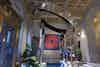
Guests are welcomed to the lobby of the U.S. Chamber during the 2025 Global Aerospace Summit
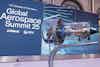
Installations at the 2025 Global Aerospace Summit
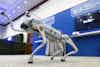
A robot from Tata Consultancy Services

Bryan Bedford, Administrator of the Federal Aviation Administration

Attendees at the 2025 Global Aerospace Summit

Attendees at the 2025 Global Aerospace Summit
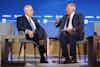
Chamber Board Chair Ross Perot Jr., Chairman of the Perot Companies and Hillwood, and Neil Bradley, Executive Vice President and Chief Policy Officer at the Chamber

Southwest Airlines CEO Bob Jordan with moderator Tom Costello

United Airlines CEO Scott Kirby with moderator Phil LeBeau, Auto and Airline Industry Reporter, CNBC

From left, Captain Houston Mills, President, Flight Operations, UPS Airlines; Matt Byrd, President and CEO, Hillwood Aviation; and Justin Brownlee, Senior Vice President, Flight Operations and Airline Planning, FedEx, with moderator, Lauren Beyer, President, Cargo Airline Association
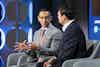
Alaska Airlines CEO Ben Minicucci with moderator Pete Muntean of CNN
Jason Trojacek Director, Digital Business Solutions, HMSHost, Avolta; Thyatiria Towns, Deputy Commissioner, Chicago Department of Aviation; and Heather Garboden, Senior Vice President and Chief Customer Officer, American Airlines with moderator, Kevin Burke, President and CEO, Airports Council International - North America
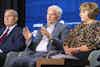
Jack Potter, President and CEO, MWAA; Chris McLaughlin, CEO, Dallas-Fort Worth International Airport; and Alexis Higgins, CEO Tulsa Airports Improvement Trust, discuss terminals.
A similar view on regulations was shared by the Chairman of the Federal Communications Chair Brendan Carr, who gave an inspiring post-lunch address on the steps his agency is taking to solidify American aerospace leadership.
“Our goal is to ensure that the United States is the most friendly regulatory environment in the world for people to start, to grow or to accelerate their space operations,” said Chairman Carr.
Powering Innovation through Partnership
The day’s programming continued to spotlight American leadership, with focused discussions on how public-private partnerships are accelerating innovation.
Brian Hughes, NASA Chief of Staff, talked about how working with the commercial space industry is helping them unlock innovation without sacrificing safety.
“The next step for commercial LEO and NASA is solicitation out to the private sector, so the best and brightest in the commercial space can come and see what the next steps are,” said Hughes.
Modernizing America’s Infrastructure
Infrastructure modernization surfaced as another top priority, with panelists from government and industry highlighting the need for updates to support growth and efficiency.
During an afternoon panel discussion with airport leaders from across the country, Alexis Higgins, CEO of the Tulsa Airports Improvement Trust, said there’s a “major need” for updated infrastructure at America’s airports.
Policymakers also took the stage to offer their perspective on infrastructure modernization.
The Chairman of the House Transportation and Infrastructure Committee Sam Graves (R-MO) and Ranking Member Rick Larsen (D-WA) joined Stephen Waguespack, President of the Chamber’s Institute for Legal Reform, for a discussion on the committee’s aviation priorities and the current state of play on surface transportation reauthorization.
Reps. Graves and Larsen both noted that surface transportation reauthorization enjoys broad support, and there have been over 11,000 policy ideas submitted by Members of Congress and stakeholders. Both members emphasized the desire for the bill to be bipartisan.
Rep. Larsen also highlighted the committee’s focus on aviation and safety.
“Aviation connects the world, it connects our country internally and domestically, it connects communities and states, and there’s always going to be a need for it,” said Rep. Larsen.
Leveraging Technology to Enhance Efficiency
Technology and cybersecurity emerged as central themes, with multiple panelists highlighting both opportunities and challenges across the aviation ecosystem—from QR codes to enhance passenger food-ordering to high-profile IT failures and the adoption of artificial intelligence.
Alaska Airlines CEO Ben Minicucci discussed the essential role that technology plays in airline operations.
“We fly people from point A to point B, but airlines are very complex IT companies, everything we do is driven by an IT application," Minicucci said while noting Alaska Airlines has tripled their IT budget in the last 10 years.
Panelists also explored the growing role of artificial intelligence, sharing how their companies are using AI and machine learning models to enhance efficiency.
Captain Houston Mills, President of Flight Operations at UPS Airlines, said AI and machine learning will, “help support our innovative global logistics network,” during a panel on the Air Cargo Outlook moderated by Lauren Beyer, President of the Cargo Airline Association.
The adaption of AI and automation is also helping meet increased demand on the manufacturing side, noted Daryl Taylor, Senior Vice President of U.S. Commercial Operations at Airbus.
“This industry is going to reach production rates that we have not seen before. The growth is significant,” Taylor said while emphasizing that investments in automation will help meet these needs.
The aviation industry is also deploying new technology to enhance the travel experience and ease anxiety for passengers, noted Jason Trojacek, Director of Digital Business Solutions at HMSHost. Trojacek highlighted how they are deploying technology at Dallas-Fort Worth to deliver what they call “digital hospitality.”
Looking to the Future
With packed-rooms and high-energy conversations, day one attendees gained invaluable insight from the leaders and decision-makers driving American aviation leadership. As the summit continues, the focus will shift to space and defense, promising more insightful discussion on the future of aerospace.
Didn’t make it to day one? Register at the door at the U.S. Chamber of Commerce for days two and three. Here's the agenda.
About the author
Faith Mabry
Faith Mabry is an executive speechwriter on the Communications team at the U.S. Chamber of Commerce.