

Small business takeaway:
- Three fast-growing brands show how in-person engagement can sharpen a growth strategy. BloomNation, an online business platform for florists, used florist conversations to uncover a service opportunity: helping independent florists sell online on their own terms and, eventually, manage more of their operations. Elephant Green Chili Chutney, a specialty condiment brand, tapped in-store product sampling to shape its retail positioning strategy. And Ordo, an oral-care disruptor, used dentist input to build credibility in a crowded category.
While modern business playbook tactics — search engine optimization/generative engine optimization, content marketing, and influencer campaigns — offer broad digital reach, they don’t necessarily engender immediate customer trust and nuanced, on-the-ground market insight.
In an era of digital outreach, these three companies used in-person tactics when starting their brands to engage influential experts prior to launch, incorporate feedback from end users during development, and grow awareness with potential customers.
BloomNation: Ground-level market research in building a category-morphing solution
Digital brands, as well as physical products, can be informed by in-person interaction. So discovered BloomNation Co-Founder and CEO Farbod Shoraka in the early days of developing the online platform that helps florists run their business.
The year was 2010 and consumers were turning online for purchases, including flowers. Shoraka was inspired by a statement from his aunt about her floral business: “No one walks into my store anymore.” Like his aunt, other florists he spoke to were experiencing diminishing foot traffic.
Services like FTD and 1-800-Flowers acted as middlemen for a network of independent florists. Customers ordered specific floral arrangements via a website or phone from these large players, which in turn had a local florist replicate and deliver the arrangement. The process did not allow independent florists much room to flex their creativity, and it was costly. Floral brokers take a commission on the total amount, thus leaving the local florist with a reduced payment.

Florists “had been slow to keep up with the times as far as shifting their own businesses online,” said Shoraka, an investment banker, who worked with partners and friends Gregg Weisstein, a management consultant, and David Daneshgar, a World Series of Poker champion with analytical skills and the Founder of AI startup Whippy, on a solution. (Daneshgar has since left the business, though his prowess in a poker tournament provided the company with its initial seed money.)
The team “walked into flower shops around California to see if the idea had legs,” Shoraka remembered. Repeatedly, they found florists who were not happy with their current options and wanted a platform that allowed them to sell on their own.
Spurred by their in-person feedback, the partners created BloomNation in 2011, first as a marketplace to keep florists from acting as merely order fillers for brokers. Since then, the platform has evolved to also offer a suite of tools to help florists run their entire business. Today, 3,500 florists are part of BloomNation in the United States and Canada. The company has grown to $250 million annually in transactional volume, with average growth of about 25% per year.
Based on an Etsy model, BloomNation does not follow the standard formula of one design template that florists are expected to follow. In other words, traditionally, a floral customer would select a summer birthday bouquet, for example, and hope that the florist produced a result that matched the photo. With BloomNation, individual florists show off their craft and artistry by posting photos of their original designs for shoppers to peruse, and consumers select specific markets around the country, depending on where they are sending the flowers.
As BloomNation evolved, the partners realized they had collected a lot of information (florists’ addresses, hours of operation, selections, and so on) that would make it relatively simple to help independents launch their own websites, modernized for e-commerce.
The results showed a 30% to 40% improvement in florists’ business, Shoraka reported. It eventually led to the launch of BloomNation’s B2B side, a turnkey software platform providing everything an independent florist needs to run a business — inventory management, email marketing, social media support, point-of-sale services, and delivery management.
The BloomNation platform is performance-based. Instead of charging upfront or ongoing costs, BloomNation gets a 10% revenue share each time a florist makes a sale. “The florist keeps 90% of what they receive, and our share includes credit card fees,” explained Shoraka. “[The model] incentivizes florists to grow, because that’s how they get paid.”
[Read more: How Floral Disruptor BloomNation Grew to $250 Million by Partnering with Small Businesses]
In an era of digital outreach, these three companies used in-person tactics when starting their brands to engage influential experts prior to launch, incorporate feedback from end users during development, and grow awareness with potential customers.
Elephant Green Chili Chutney: Overcoming initial resistance with in-person experience
Face-to-face feedback has been the lifeblood of startup condiment brand Elephant Green Chili Chutney right from the beginning. The Indian-inspired zesty condiment brought to market two years ago by mother-and-daughter team Cashmira Sethna and Tanzie Turel, started as a family and friends' crowd-pleaser.
Sethna was an avid home cook and formerly wrote a recipe column for Indian Express. Her green chili chutney was a hit after-school snack with her children and a party favorite among friends. "We would have [our] doctor and lawyer [guests] say, ‘I’ll give you medical care, I’ll give you legal advice, just give me chutney,’” Turel laughed.
Turel told her mother they should do something with the chutney, and her own day job in real estate finance for Greystone alerted her to an opportunity. “I became friends with a lot of people who observe a kosher diet,” she said. As they tasted and enjoyed the chutney, Turel saw they were seeking more flavor in their diet with something that was not too sweet or full of additives. “There was white space there,” she noted.
Today, Elephant Green Chili Chutney is in 100 specialty food stores nationwide as well as on trendy foodie platform Goldbelly and Amazon. The chutney’s flavor profile of green chili, cilantro, dried coconut (unusual for a condiment, Turel points out), vinegar, salt, and sugar, appeals to the palate seeking global tastes without being overpowering. But its versatility is the real sales driver, she noted. “The chutney is globally inspired, but it’s by definition something to take home to make an awesome dinner.”

The chutney’s attributes dovetail well with current consumer desires for convenient meal prep with global flavors. U.S. sales of global condiments alone are expected to reach $17.1 billion by 2030, up from $11.5 billion in 2022, according to DataM Intelligence 4Market Research.
Manufacturing started in November 2024, and the team did grassroots, in-person store visits to introduce the product. It was “rubber to the road, store to store” for at least seven months before they got a distributor, Turel said. “We didn’t have connections or knowledge, but we found mentors along the way.”
The brand started in specialty food stores to grow slowly. At first, Turel had no positioning demands — she just wanted buyers to like the product. Now, she advises them to prioritize the chutney first at the cheese counter and second at the seafood or meat counter. “And almost never should it go in the global aisle because it gets lost,” she said.
“This product is contingent on tasting,” Turel continued. The company does regular samplings to grow awareness and gauge feedback. When it comes to customer feedback, “We have a 95% love rate, and I’ve seen that myself doing hundreds of demos firsthand,” she said.
Demos highlight the many uses for the product, including a recent one at Williams-Sonoma, where they sampled a three-ingredient potato salad with potatoes, chutney, and spring onion.
Hustle, hard work, and homework are the advice Turel would share with startups. “If there is one thing this country gives you, it is resources — things you can’t find as easily or quickly in other places,” she said. “But you’ve got to burn your feet, you’ve got to lose your voice, you’ve got to do what it takes.”
[Read more: How Elephant Green Chili Chutney Turned a Home Recipe into a Nationwide Condiment Brand]
Ordo: Building credibility through expert validation
When Barty Walsh, Founder and CEO of Ordo, set out to solve the overload consumers could feel amid oral care options, he engaged an influential group to collaborate on design and development: dentists.
“We began by reaching out to dental clinics in the U.K., getting dentists on board with the products,” Walsh told CO—. After a year of building an audience, in 2019, Walsh hit U.K. retail shelves with his line of sonic and electric toothbrushes (which has since grown to water flossers, toothpaste, and mouthwash) designed to offer American Dental Association-backed, affordable oral care to more people.
Ordo is designed to stress the basics: Brush properly for two minutes, two times a day. “It doesn’t go much deeper than that,” said Walsh, who was inspired by his own experience, realizing that choices and price points were daunting among electric and sonic brushes. (Electric toothbrushes use a rotating head, while sonic toothbrushes use high-frequency vibrations to clean hard-to-reach areas.) “Most people use manual, partly because of price and partly because, confusion,” he said. “It was unclear what I needed as a consumer.”
The magic formula was marrying the optimal level of cleaning combined with affordability. For example, Ordo’s most expensive item in the Sonic Lite line is $50, and the brand aims to deliver comparable results to $150 to $200 models at a lower price point. “Why should someone who can’t afford it not have access to quality?” he said. “This is a healthcare item as well as personal care.”
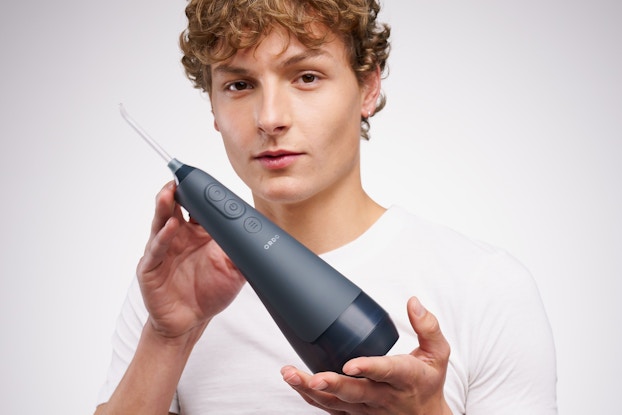
Ordo started selling internationally in 2023, first expanding to Australia, New Zealand, South Africa, the United Arab Emirates, and Europe, and since late 2024, expanded into the United States, where the oral care market is valued at $10.3 billion, says Statista.
While Ordo is now a strong presence in the U.S. in chains like CVS, Walmart, Target, and on Amazon, nudging its way into a market dominated by big players was not cut and dry. Oral care is a category that is dominated by two major brands globally: Oral-B, from Procter & Gamble and Philips Sonicare.
While efficacy came first, Walsh understood the importance of design and emotion in carving out a niche. To differentiate in the oral care space, Ordo placed a premium on design with a line of sonic brushes in eight colors: violet, charcoal gray, rose gold, white/silver, arctic blue, mint green, snow, and sage. “If people can connect emotionally with it, they are more likely to use it,” Walsh explained.
Ordo eventually partnered with Squishmallows, the hot stuffed toy brand, to license some of its popular animal designs for a line of rechargeable or battery-operated toothbrushes aimed at kids and teens. “It added credibility because it had a fan base, and retailers were already working with that brand, which made it a bit easier to get on the shelf,” he continued.
[Read more: How Fast-Growing Oral Care Disruptor Ordo Broke into Big Retail]
CO— aims to bring you inspiration from leading respected experts. However, before making any business decision, you should consult a professional who can advise you based on your individual situation.
CO—is committed to helping you start, run and grow your small business. Learn more about the benefits of small business membership in the U.S. Chamber of Commerce, here.
Enroll today!
Sign up for Small Business B(AI)sics, our free AI training course, designed for small businesses like yours. Learn the basics of AI in just 30 minutes, plus get resources to help you apply AI skills at your business today.


