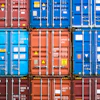
Small businesses around the country are speaking out about tariffs — the months of worrying about levies and countermeasures, trying to prepare amid uncertainty, and the impacts that came into devastating focus when the Trump administration announced "reciprocal" tariffs on approximately $3 trillion of imports.
Many small businesses have shared stories of canceled bookings, rising costs, stockpiling supplies, and, ultimately, the fear of having to pass the cost of tariffs on to consumers. Or worse.
Even those that can pass the cost on to customers shared their concerns that the added costs will impact their ability to remain competitive and profitable — or to grow.
Here’s what American small businesses are saying about the impact of tariffs.
Uncertainty
"We are running out of inventory because there has been so much uncertainty about what tariffs we will have to pay when our goods land in the U.S....I held off on ordering and missed the entire late summer selling season. We are marking items out of stock daily and it’s hitting our bottom line.”
— Marla Showfer, owner and founder, The Winding Road, Geneva, Illinois
"With 36% (38% with steel) [tariffs] for Thailand, we can’t survive, and at this point have stopped ordering any new products. The uncertainty is insanity and [the] back and forth is crushing small businesses like us....If nothing is done soon we will have to shut down our business.”
— Matt Katzman, owner and operator, Velocity Sleep, Suffield, Connecticut
“Ever since the tariffs have become a reality, it's [been] absolute chaos and insanity....Regardless of where you fall on the politics of this, just remember that there are real people behind these products. These aren’t just pieces on a chessboard.”
— Matt Caputo, CEO, Caputo’s Market and Deli, Salt Lake City, Utah, to Fox 13
Sudden Price Hikes
“When I opened my first tariff bill for Baby Paper, it hit like a gut-punch. A 30% increase in my cost of goods. How is a small business supposed to survive that? Every option is a no-win. Change factories? Not easy & I risk quality. Raise prices? I risk losing customers to bigger brands. Pause production? I might as well shut down....This is how small businesses die—not from bad products or poor planning, but from policies that shift beneath our feet. We need a lifeline. Without relief or stability, many of us simply won’t make it.”
— Sari Wiaz, president, Baby Paper, Glenview, Illinois
Are tariffs impacting your business?
"I recently ordered a batch of linen from my supplier in Lithuania that I've been working with for years. On a $8,400 order, I was charged over $1,000 in tariffs. With already small margins, I don't know how I can continue offering my handmade goods at the quality and price I have been. It is disheartening and frustrating."
— Elana Gabrielle, owner and designer, Elana Gabrielle, Portland, Oregon
“The sudden imposition of the 25% EU steel tariff was a harsh setback for my small company, which hit my sea freight order, which arrived days after the tariff was introduced with an unexpected $8,700 charge on top of the normal customs fees I pay. A big hit for a small, family-run business.”
— Valerie Bressler, owner and CEO, VB Hose Clamps, Fort Lauderdale, Florida
"I have an oral care company and all of our empty containers such as tubes, bottles and tins, as well as dental floss come from China. Currently, I have an order of 5,000 bamboo lip gloss tubes at port. The order cost me $5,000. The tariff I have to pay is $9,983. Obviously, this triples the COG for this item, cutting into our profit in a huge way. I will have to take out a loan to pay this extra expense."
— Ginger Price, founder and owner, Dr. Ginger's Healthcare Products, Phoenix, Arizona
MORE FROM THE CHAMBER: Tariffs Rise for American Businesses. Higher Prices Loom for Consumers
“These [tariffs] are devastating. We ordered about $200,000 of product, already sold to customers, with pricing based on a 28% tariff. The extra 84% tariff threatened will cost us an extra $168,000 in tax that we can't even pass on to our customers. We are a very small company and don't have a lot of extra funds. If this tariff stays, we could be put out of business due to decreased demand, and our 10 employees will be out of a job. If the tariffs had not been increased, we were hoping to hire another engineer or two.
— Lynnette Stokes, co-owner and CFO, Stokes Robotics, Carl Junction, Missouri

Consumer Impacts
"Tariffs directly impact our mission to make meditation devices accessible to American children with anxiety and ADHD....Tariffs force an impossible choice: absorb costs threatening our sustainability, or price out families who need accessible mental health tools....[W]e need nuanced trade policy, not blanket tariffs that hurt American families.”
— Anna Peterson, founder, Zenimal, Manhattan Beach, California

"These tariffs create harmful consequences: forcing price increases on essential products, penalizing our use of sustainable materials, and disproportionately impacting small businesses like ours."
— Libby Anderson, community manager, Esembly, Brooklyn, New York
“We have just shipped a container of Sonic Alert products that we paid around $250,000 that will arrive in the U.S. in the next week or so. We have no idea how much tariffs we will have to pay. The current rate of 100% is more than the profit we will make from selling the product. We do not have the cash available to pay that amount. It probably does not make sense to borrow that much money to pay the tariff as we will not be able to recoup that when we sell the products.
Our company that has been in business since 1979 could be forced to close since we had no opportunity to plan for these changes to our operating environment. The deaf community will lose the largest supplier of products developed to help them be alerted to their doorbells, telephones, and most importantly, smoke and fire alarms.”
— Adam Kollin, owner, Sonic Alert, Troy, Michigan
“It’s a big shock to the system. We're going to have no choice but to pass this on, a portion of it, to our customers. It's a matter of survival.”
— Craig Freedman, CEO, Freedman Seating, Chicago, Illinois, to ABC 7 Chicago
Creating Negative Cash Flow
“Last month, I cashed in my retirement fund to keep the business afloat. My brother, who has run the business alongside me for the past four and a half years, had to return to his old job because the business can no longer support both of us…We are doing our best to handle all the extra work with our now smaller staff of three. Sales are down 61% since ‘Liberation Day’ over the previous six months…The silver lining is that I have started to seek distributors for my products outside of the U.S. We had a very successful launch in South Korea and have a lot of interest from EU countries. I don't think the international business will be enough to keep us afloat, so hopefully something changes soon.”
— Beth Benike, owner, Busy Baby, Zumbrota, Minnesota

“At this point the tariffs have wiped out 115% of our profit. I am putting in personal funds to keep our business operating and retain our employees. Not sure how long we can last or my personal funds run out.”
— Richard May, president, MFG Direct USA, Corona, California
“The tariffs on the parts we import from the UK and Germany range from 10% to potentially 50% depending on if made with steel or aluminum. This has been very painful for our business, greatly impacting cash flow as shipping and tariff payments are due strictly at net 30. We cannot hire more people and we cannot offer raises and bonuses as generously as before.”
— Megan Witt, VP/co-owner, W.C. Works, Englewood, Florida
“Due to increased tariffs, we were no longer able to continue manufacturing our product at the factory in China where our molds were produced. The molds required an initial investment of $10,000, and we did not have the capital to commission new molds at an alternative facility. As a result, we were forced to shut down the business and ultimately file for bankruptcy. Prior to March 2025, the product was performing very well, with strong sales both on our website and on Amazon. The business did not fail due to lack of demand, but rather because the added tariff costs made production financially unsustainable. The company was 100% self-funded, and we had already invested our life savings into the business, leaving us without the resources needed to absorb the increased manufacturing costs. These tariffs completely upended our lives.”
— Tanya Rasmussen, co-founder, SplashZen, Bonney Lake, Washington
See the Impact of Tariffs From Small Business Owners in Every State
The Real Impact of Tariffs
Small Business Owners Across the U.S. Share Their Stories
Alabama
Alaska
Arizona
Arkansas
California
Colorado
Connecticut
Delaware
Florida
Georgia
Hawaii
Idaho
Illinois
Indiana
Iowa
Kansas
Kentucky
Louisiana
Maine
Maryland
Massachusetts
Michigan
Minnesota
Mississippi
Missouri
Montana
Nebraska
Nevada
New Hampshire
New Jersey
New Mexico
New York
North Carolina
North Dakota
Ohio
Oklahoma
Oregon
Pennsylvania
Rhode Island
South Carolina
South Dakota
Tennessee
Texas
Utah
Vermont
Virginia
Washington
West Virginia
Wisconsin
Wyoming
Barriers to Growth
“At 50 tariffs, we cannot be competitive with our overseas competition, and are left with overpriced inventory that will need to be sold at cost just to get rid of it. After it is gone, we will be faced with the decision to bring in more overpriced material for no profit, or to close the manufacturing and just import the finished goods.”
— Seth Webb, purchaser, A-American Machine & Assembly Co, Rockford, Illinois
"Small businesses like mine create American jobs, but we can't survive when tariffs make it prohibitively expensive to operate. Trade supports American prosperity—these tariffs are undermining it.”
— Aabesh De, CEO, Flora, Nashville, Tennessee

“This year was supposed to be my first earning a living wage. Instead, new tariffs are threatening to wipe out everything I’ve built. Orders are placed 9–12 months in advance and cannot be canceled. With tariffs now as high as 37%, my entire profit margin is gone. I am responsible for paying for these shipments, but when they arrive, I’ll be operating at a loss."
— Ann Sullivan, owner, Nature’s Child, Kalispell, Montana
“My firm specializes in long-term growth consulting, and our five-year strategic plan rests strongly on expansion into international markets. Trade talks, tariffs, and shifting international relations will have a major impact on our ability to build the networks that we need to reach our goals.”
— Josh Brockway, founder and CEO, Key and Crown, Keller, Texas
“Additional tariffs on the components and raw materials we are importing will increase our costs and increase the likelihood of retaliatory tariffs on our exported products, adding additional headwinds against our small business....I am very concerned about the negative impacts of a trade war and our ability to continue to support our employees and our community.”
— Tim Frey, president and CEO, MRP Bike, Grand Junction, Colorado
"Clear and consistent policies are essential for businesses to thrive, make long-term investments, and ensure the well-being of our workforce. The time for decisive action is now to prevent further disruption and to foster a climate where businesses can grow and contribute positively to the economy.”
— Traci Tapani, owner and co-president, Wyoming Machine, and a U.S. Chamber Small Business Council member
MORE:U.S. Chamber to Administration: Small Businesses Need Immediate Relief from Tariffs
“We’ll now be paying an additional 10% or more for all of our cocoa beans on top of their already elevated prices. This is not going to bring cocoa farming jobs to the U.S. or increase American manufacturing—it’s just going to hurt American chocolate manufacturers.”
— Matt Weyandt, co-founder, Xocolatl Small Batch Chocolate, Atlanta, Georgia to CBS News


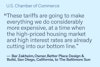
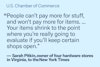
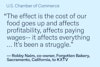
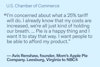

Layoffs and Closures
“Only big companies are able to absorb the tariffs. Thousands of small businesses like ours will not make it to the new year. No one in our industry has ever seen commerce come to a halt like this. I have been in the industry for 39 years and never has there been a crisis like this.”
— Brian Eliason, president, Northern Fisheries, Portsmouth, Rhode Island
“We are in the process of closing our business now. Tariffs have affected my business and unable to continue as people will not buy the products due to the costs I would have to charge to make a profit.”
— Robbin Firth, CEO, Heartfelt Silk, Stillwater, Minnesota
MORE:U.S. Chamber to Administration: Small Businesses Need Immediate Relief from Tariffs
— Mike Stewart, president, Schauer Battery Chargers, Cincinnati, Ohio
“We’ve weathered many storms—economic downturns, the 2016 tariffs, and the COVID pandemic—but what’s happening now may be the final blow. Small businesses like ours don't have the cushion to absorb sudden costs or pivot quickly....We may not survive the next few months. Small businesses are the heart of this country, but that heartbeat is fading fast.”
— Jennifer Sidle, owner, BinkyBunny, San Leandro, California
"Increased steel costs driven by tariffs directly threaten our ability to maintain jobs here in the U.S. As a manufacturer that cannot source this specific steel domestically, we are forced to absorb higher material costs with no viable alternative. These pressures leave us with difficult decisions — including the possibility of layoffs — just to remain operational.
Trade supports American jobs when it gives businesses access to the materials they need at competitive prices. Without relief or exceptions, tariffs hurt the very workers they claim to protect. We urge policymakers to consider exemptions for businesses like ours that rely on global supply chains to keep American factories running.”
— Daniel Grammatikos, CFO, Kocher+Beck USA, Lenexa, Kansas
One Company's Story
"The tariffs are killing my business and are the single biggest factor determining whether we survive."
— Ben Knepler, co-founder, True Places, Wallingford, Pennsylvania
“The tariffs have impacted us so severely; we are currently restructuring. All of our wholesalers have postponed or canceled orders...There is no happy ending for us in sight if these tariffs stay in place. A 90-year-old local company will be out of business."
— Derek Beaudoin, co-owner and COO, Annalee Dolls, Moultonborough, New Hampshire
“We are a manufacturing company that employs 55 people. With our current offshore strategy, we are able to provide those employees with great wages, benefits and most importantly, a work-life balance. We do not have the location space, equipment or people to be able to manufacture all our demand in-house
We have put a halt on our facility upgrade plans and have also stopped the imports. We pride ourselves on the fact that we are an American, employee-owned corporation...We value our people and kept them employed during the housing crisis and COVID, choosing people over profitability. This situation is putting that in jeopardy.”
— Michele Derrigo-Barnes, president and CEO, Plattco Corporation, Plattsburgh, New York

"The current tariff structure—especially as it applies to essential imported goods—is pushing our costs to unsustainable levels. We are not choosing to import—we are required to. Adding to the burden, the unfavorable dollar-to-euro exchange rate has dramatically increased our landed costs on top of already high tariffs. This double pressure is rapidly eroding our margins and may soon force us to make impossible decisions, including the closure of a business that has been a trusted industry name for over three decades."
— Cindy Rust, president and CEO, Princeton Medical Group, Nashville, Tennessee
“If this is the end of my American dream, I'm going to go down swinging...It would take years and millions and millions of dollars to build such a thing that's been built overseas over decades. It's just not sustainable. And it's truly catastrophic to so many businesses, big businesses and small businesses alike. But I really think small businesses are going be the casualty of this trade war.”
— Emily Ley, Simplified, Pensacola, Florida, to CBS News

Global Supply Chain, Lack of U.S. Substitutes
“Our business relies heavily on the global supply chain as there is little to no domestic production of the products we sell. In our industry, tariffs are not driving U.S. manufacturing or job creation. Instead, they are increasing wholesale costs, reducing competitiveness, and ultimately raising prices for consumers on everyday essential goods.”
— Carl Menk, President, Global Pack Source, West Caldwell, New Jersey
“Our bikes are only possible through a global supply chain—some bike parts have never been made in the USA, ever...Now we have lost 30-40% of our customers, even our USA customer orders are down out of concern for the economy. Our costs are up. Tariffs could kill us and our industry.”
— Hanna Scholz, president, Bike Friday, Eugene, Oregon
“There are several components of [Murphy’s Naturals] products like incense sticks that cannot be sourced in the USA. Tariffs will eliminate profits and put this innovative technology into a loss position after years of research and development and a significant financial investment. Prior to the new tariffs, [we were] already working to find alternative manufacturers to move manufacturing out of China, but that will be a multi-year process.”
— Philip Freeman, founder and CEO, Murphy's Naturals, Raleigh, North Carolina, and a U.S. Chamber Small Business Council member
"The reality is that the U.S. simply doesn’t have the factories that 'produce for others' or can re-tool machinery on a constant basis, labor force, or infrastructure right now to absorb the kind of 'hand-crafted' production deficit we’d face by bringing all toy production immediately back home.
"I face this challenge not due to a lack of innovation or a failure to adapt, but because I, along with thousands of other small businesses, simply cannot survive the crushing tariffs on an industry that has always been previously exempted...For industries like toys, not being excluded from these tariffs is leaving thousands of other small business owners like me on the verge of having to close up shop, let go my employees, and file for bankruptcy.”
— Joann Cartiglia, founder and president, The Queen’s Treasures, Ticonderoga, New York
Questions about tariffs? Please contact us: Sam@uschamber.com
"Many of the components impacted by these tariffs are not available from U.S. manufacturers, leaving us facing skyrocketing tariff costs, disrupted supply chains, and a shrinking ability to compete in our own market. Worse still, these policy shifts have occurred with little notice and no structured plan for transitioning to domestic production. As a company working toward onshoring our manufacturing in Kentucky, we are now watching that vision become financially impossible due to the very tariffs meant to encourage domestic industry."
— Nathan Rowton, president, HVAC Distributing & MRCOOL, Hickory, Kentucky
Cancelled Orders
“Because of the tariffs, we could not accept any more shipments, so our tins are still stuck in China. Our distributor sales in May were only $15k. In June, they were $0. Losses so far [include] $69,000 and two employees. Is there any relief?”
— Debra St. Claire, CEO, St. Claire’s Organics, Santa Clara, New Mexico
More on Tariffs

"After recent U.S. tariffs, several international clients canceled or paused bookings, citing trade tensions and distrust of U.S.-linked businesses. A German client said, ‘It just feels too complicated now.’ We projected 12 international clients this summer—only four booked. We’ve invested over $5,000 to grow our U.S. client base, but with recession fears and rising costs, fewer Americans are booking.
"Tariffs aren’t just economic—they affect perception and partnerships. My business depends on global trust. Trade policies must promote cooperation to help small businesses like mine grow and compete internationally. Tariffs affect service businesses like mine.”
— Bernie Waruru,founder, Berngo Safaris, Cedar Springs, Michigan
“The ongoing tariffs are having a direct impact on our vacation rental business, with cancellations from Latin American and Canadian guests and a noticeable drop in new bookings from these markets. While European travelers haven't begun canceling, they are holding off on making reservations, adding to the uncertainty. Combined with rising costs and broader economic volatility, these shifts are creating real pressure on our family business.”
— Heleena Sideris, general manager, Park City Lodging, Park City, Utah, and a U.S. Chamber Small Business Council member
“We are a small custom metal products manufacturer. The increase in steel and aluminum tariffs directly impacts the input costs of our business, whether or not the metals we are buying are imported or not. Domestic producers are increasing their prices too...It's a simple tax increase for us that we can't absorb. We are raising our prices also, and seeing customers delay or cancel projects.”
— Sandra Ryan, vice president of operations, Ryan Industries, Hillsboro, Oregon
Watch: In a recent special event for small businesses, the U.S. Chamber's Neil Bradley shared the latest on tariffs and taxes.
Watch: In a recent special event for small businesses, the U.S. Chamber's Neil Bradley and John Murphy shared the latest on tariffs and how they are impacting small businesses.
See the State-by-State Impact

Impact on Americans
While the U.S. Chamber shares concerns about issues including border security, the scourge of fentanyl, and unfair trading practices around the globe, tariffs won't solve those problems and instead would lead to higher prices for Americans.
"The bottom line is this: tariffs are a tax paid by Americans, and their broad and indiscriminate use would stifle growth at the worst possible time," Chamber President and CEO Suzanne P. Clark said in her annual State of American Business address. She stressed that to boost economic growth, America must participate in the global economy. That includes seizing opportunities to increase trade.
In 2024, the Chamber unveiled the Growth and Opportunity Imperative for America, an initiative to urge policymakers to focus on a goal of 3% annual real economic growth, which will raise wages for workers and create new opportunities for Americans to reach their dreams.