International

More than 95% of consumers live outside the United States. Selling more U.S.-made goods and services around the world is crucial to American jobs and will help businesses small and large grow. Expanding trade also enhances the competitiveness of U.S. manufacturers while boosting the buying power of American families. The International Affairs Division of the U.S. Chamber of Commerce leads the business community’s efforts to shape global policy.
Featured





Our Work Around the World
- International
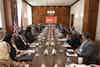
Why Major World Leaders Meet with the Chamber Every YearThe U.S. Chamber, unmatched in its advocacy efforts on the international stage, meets with top government officials from around the world to discuss investment, innovation, trade, and economic growth.
By Sean Hackbarth



U.S. Chamber members range from small businesses and chambers of commerce across the country to startups in fast-growing sectors, leading industry associations, and global corporations.
Discover the ROI Chamber membership can deliver for you.
Learn about the International Affairs Division
Around the globe, the U.S. Chamber advocates for free enterprise, competitive markets, and rules-based trade and investment as the path to economic opportunity and prosperity for all. We work every day to break down barriers to trade and investment, open new markets for American exports and investments, and make sure there's a level playing field for U.S. companies.






Join us and become a part of our movement to save the system that will secure our collective future.
Your voice is essential, and your participation is critical.
Related Litigation
Events
- Chambers of Commerce2026 Southeast InstituteLive Now11:00 AM EDT - 11:30 AM EDTHybridLearn More
- Chambers of Commerce2026 Northeast InstituteSunday, July 26 - Thursday, July 3011:00 AM EDT - 11:30 AM EDTHybridLearn More
- WorkforceTPM NLN Annual Summit 2026Tuesday, September 29 - Wednesday, September 30U.S. Chamber of Commerce, 1615 H St NW, Washington, DC 20062Learn More
Latest Content
- Business is delivering climate solutions. The evidence was all over COP28.The U.S. Chamber submitted comments to the Treasury Department in response to its request for public input on the draft OECD/G20 Inclusive Framework Multilateral Convention to Implement Amount A of Pillar One and accompanying documents.Fostering environments that support agriculture development for smallholder farmers in AfricaThe U.S. Chamber joined the Canadian Chamber of Commerce and several other North American business organizations in calling on Canada to withdraw its unilateral and discriminatory digital services tax proposal.Small businesses will face increased logistics and e-commerce costs due to the retraction of widely supported U.S. digital trade rules.